
Short Snippets on St. Cuthbert

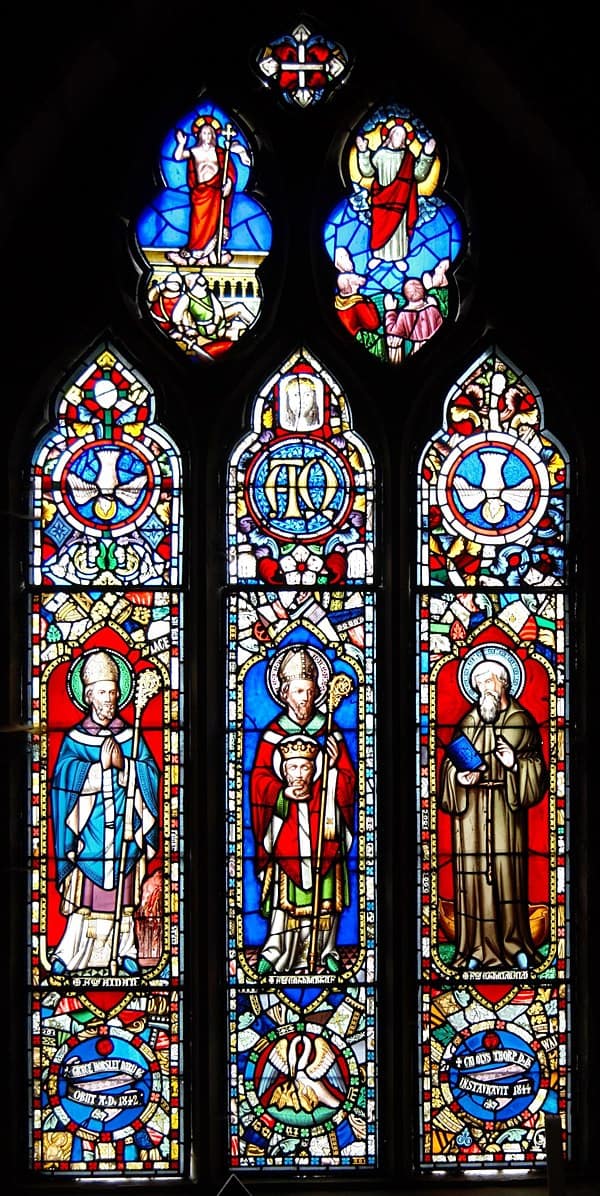
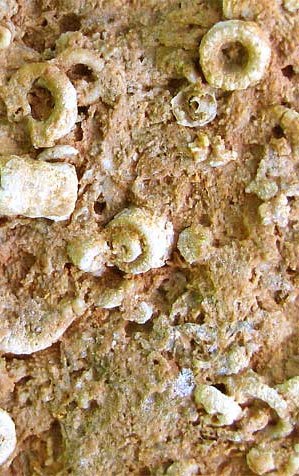
St Cuthbert of Lindisfarne is one of Britain’s most beloved saints, a figure deeply woven into the landscape and folklore of Northumbria and beyond. Unlike many saints whose miracles revolved around grand cathedrals or courtly circles, Cuthbert’s wonders emerged from wild places-seaside caves, holy wells, and windswept isles. His legend lives on through sacred sites, relics, and even fossilised beads found on the shores of Lindisfarne. This connection to the wild, to meditation and inner listening, and to the common people is something he had in common with many of the older saints in the UK.
This month, on 20th March, we celebrate St Cuthbert’s Lesser Feast Day, a day marked in the liturgical calendar to honour his legacy. While his main feast on 4th September commemorates the translation of his relics to Durham, 20th March marks the date of his death in 687 AD. Traditionally, this is a time when pilgrims, and folk magic/ folk religious practitioners reflect on his connection to the land, the miracles attributed to him, and his enduring presence in northern folklore. (And to some extent, much of the UK due to the distribution of his legends in early written work and oral folklore)
The Early Life and Calling of St Cuthbert
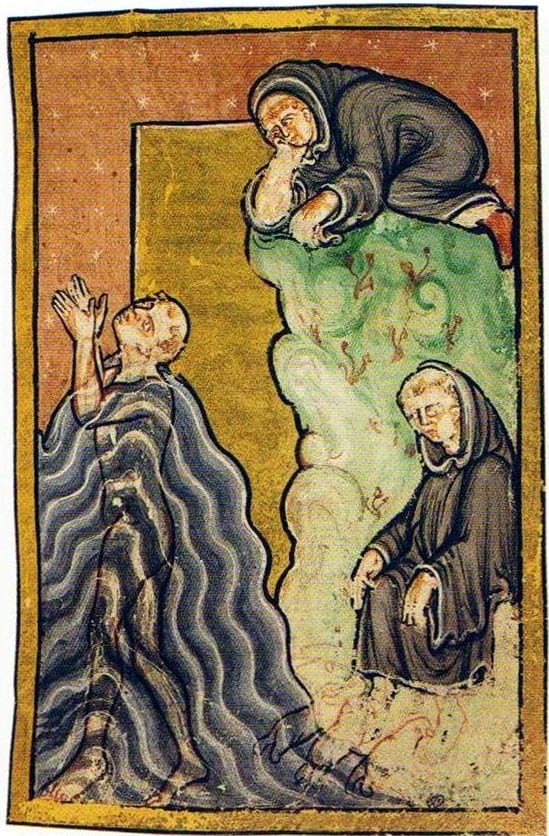
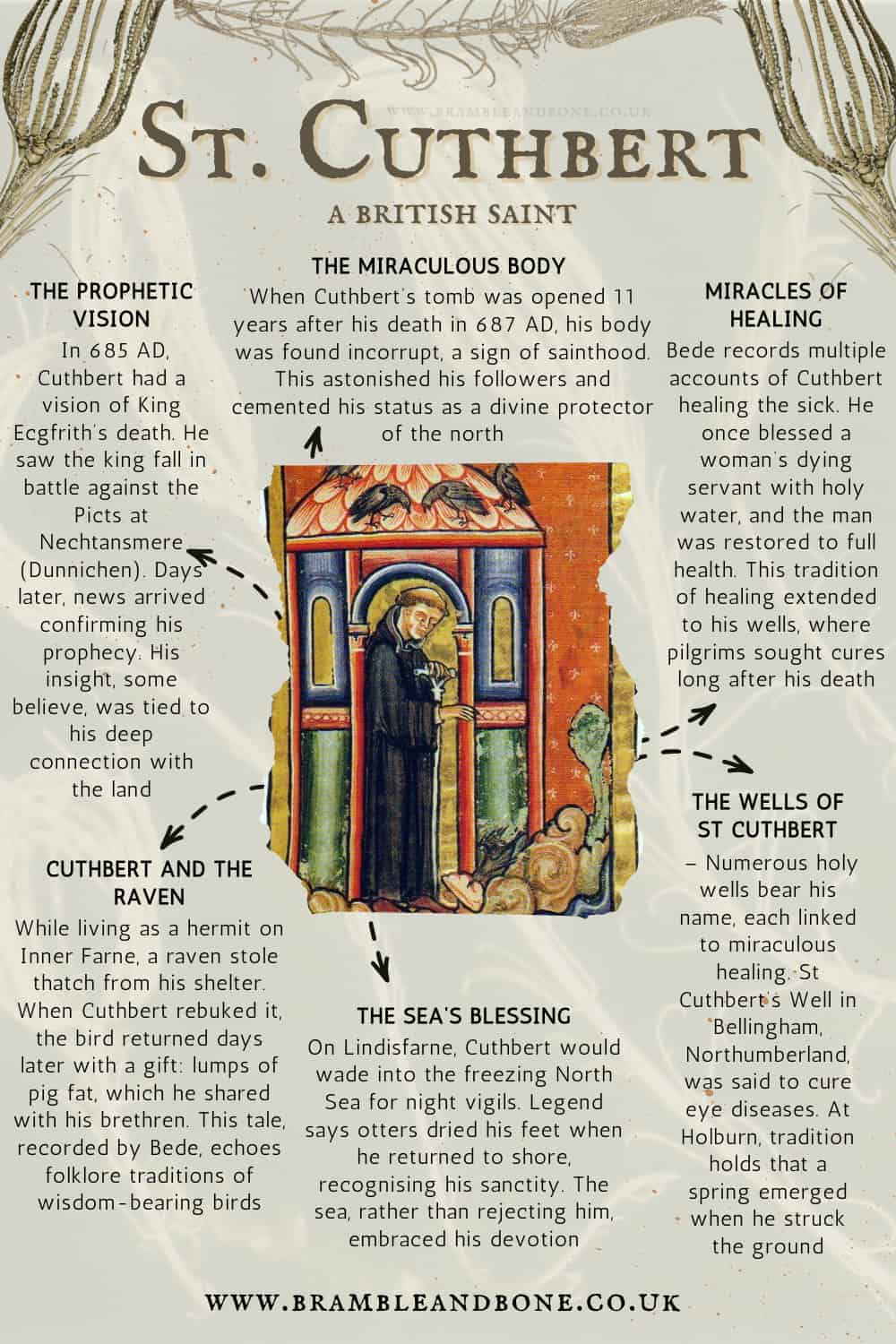
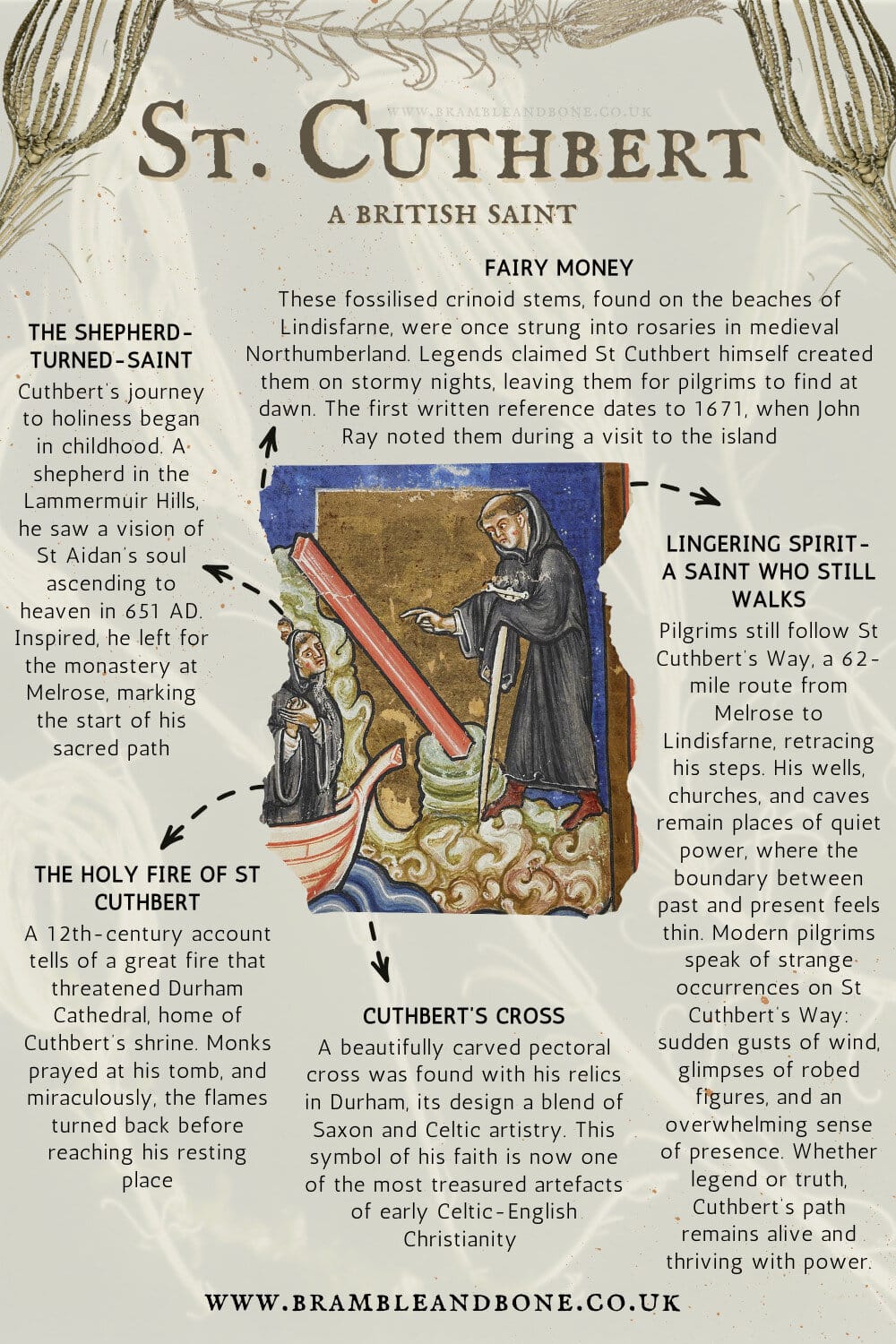
Cuthbert’s path to sainthood began with a vision in 651 AD, when he saw the soul of St Aidan ascending to heaven. Taking this as a divine calling, he left his life as a shepherd and entered Melrose Abbey, beginning his journey as a monk, missionary, and miracle-worker (Bede, Life of St Cuthbert). His devotion to solitude and nature led him to Lindisfarne and eventually the Inner Farne, where he lived as a hermit before becoming Bishop of Lindisfarne.
His miracles were not limited to great halls or city streets but were tied to earth, water, and the creatures of the land and sea.

The Sacred Wells of St Cuthbert
-
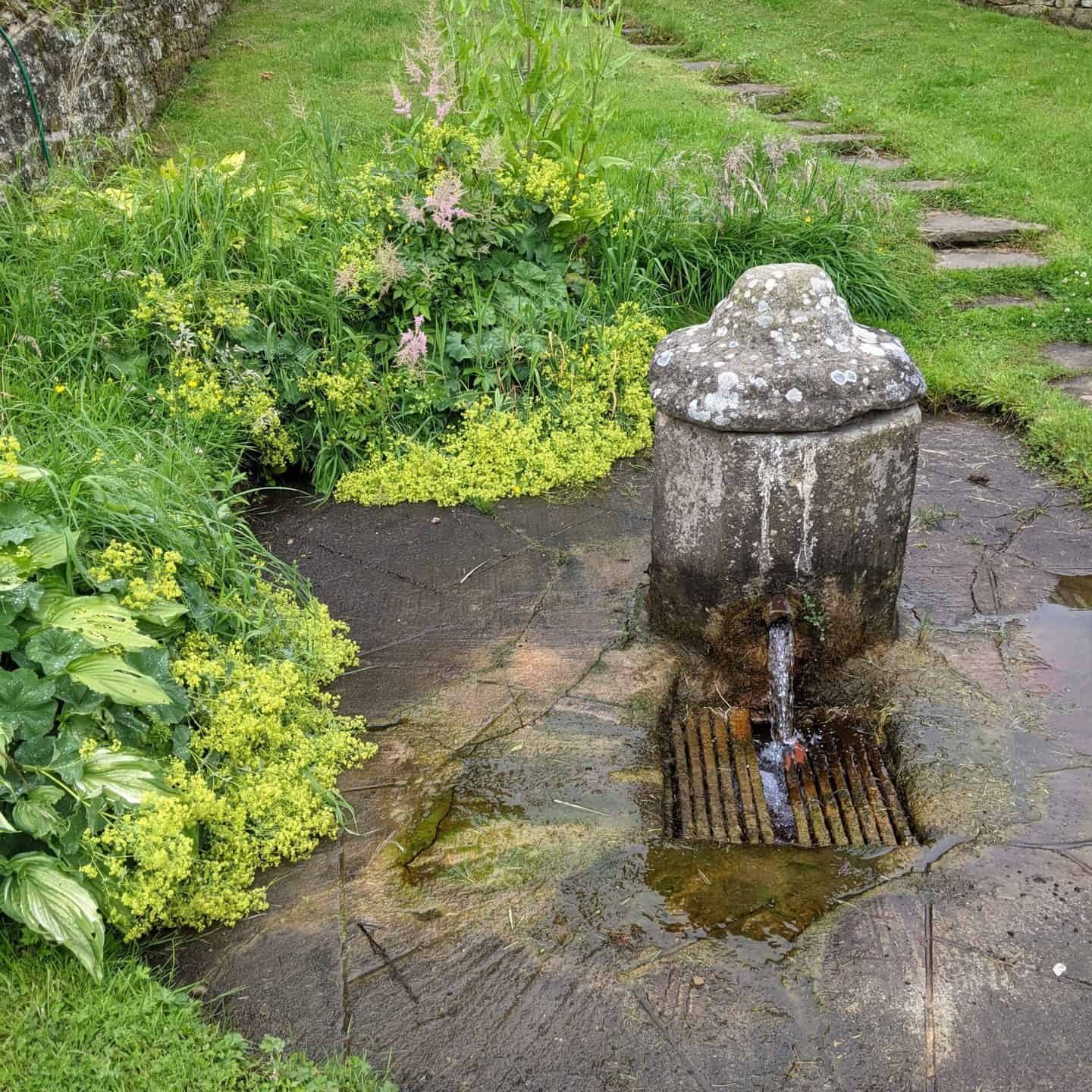
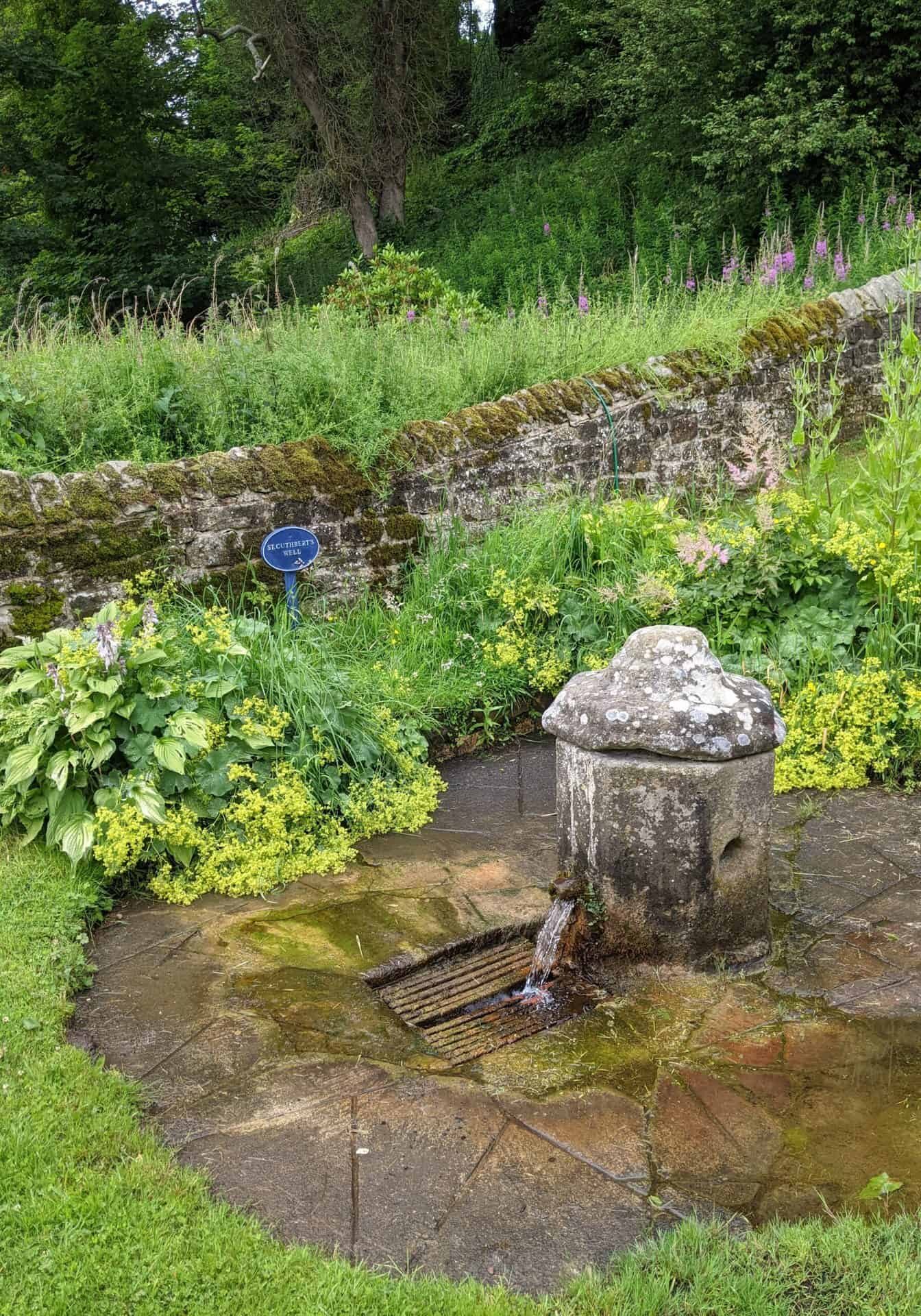
St Cuthbert’s Well (Bellingham, Northumberland): Famous for its healing properties, particularly for ailments of the eyes.
-
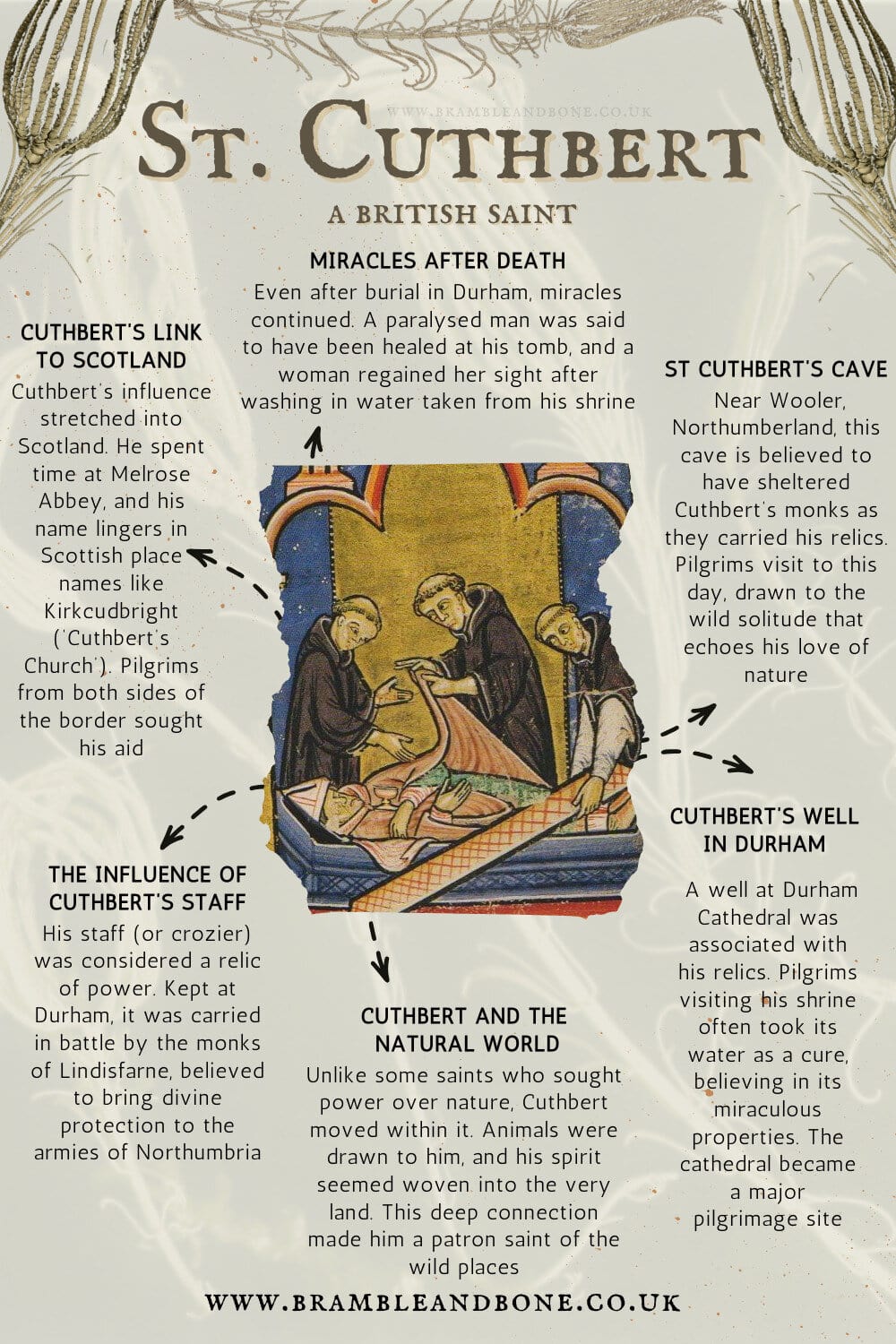
Holburn Well (Northumberland): Said to have appeared when Cuthbert struck the ground with his staff.
-
Wells of Melrose and Lindisfarne: Sites of medieval pilgrimage, where water was collected and carried away for blessings.
Encounters with Animals and Nature’s Response
👆🏻 Click to see larger image! 👆🏻
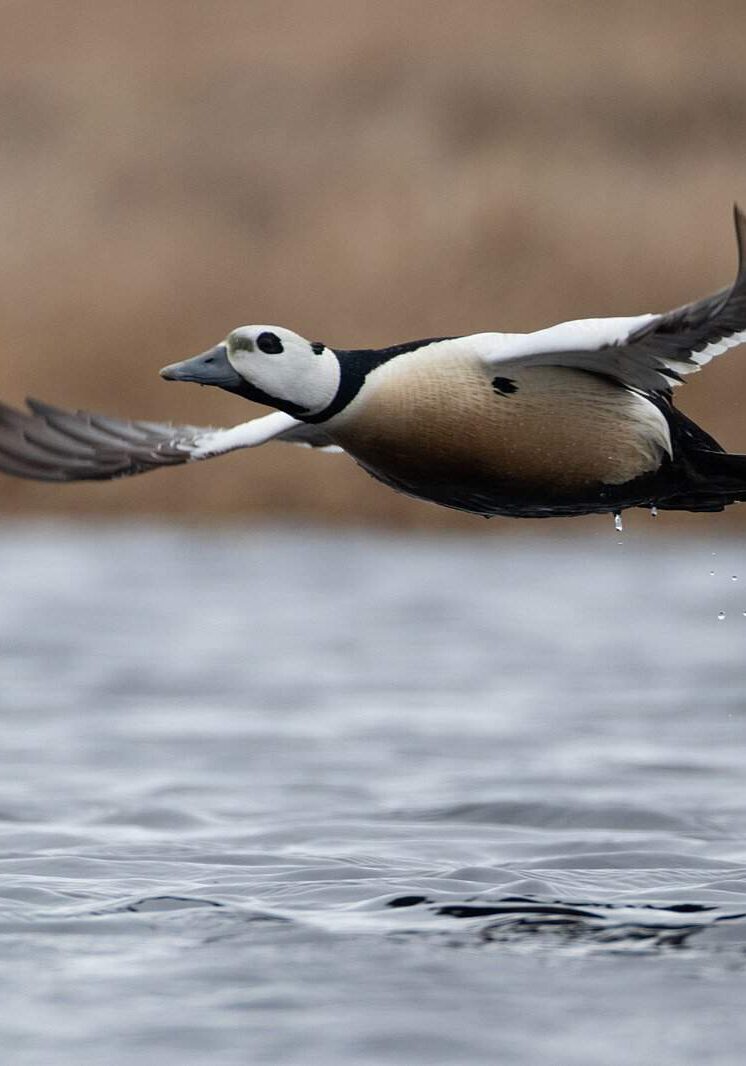
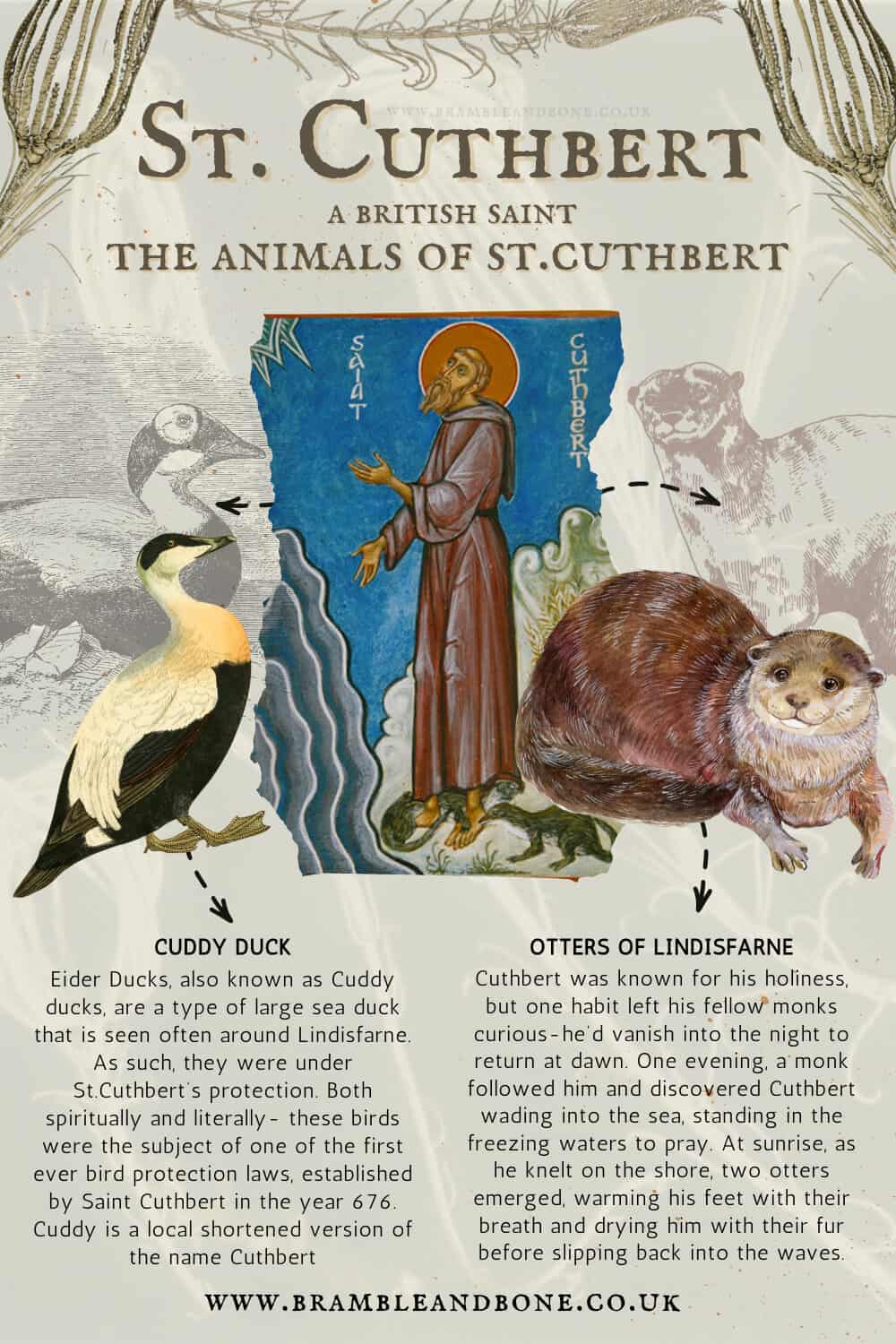
Cuthbert’s relationship with nature is one of the most fascinating aspects of his story. Unlike some saints who sought to dominate the natural world, Cuthbert moved in harmony with it. His miracles often reflect this deep connection:
-
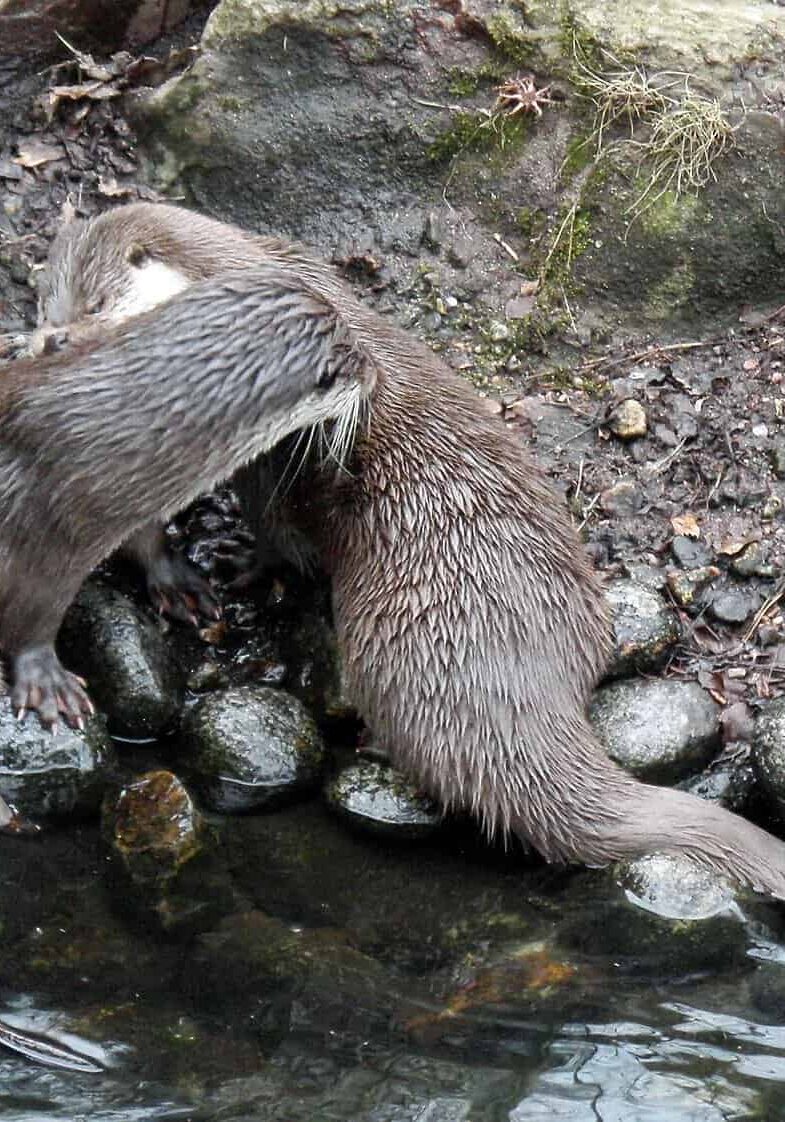
The Otters of Lindisfarne: Cuthbert would pray in the freezing sea at night. When he emerged, otters were said to dry his feet with their fur (Bede, Life of St Cuthbert).
-
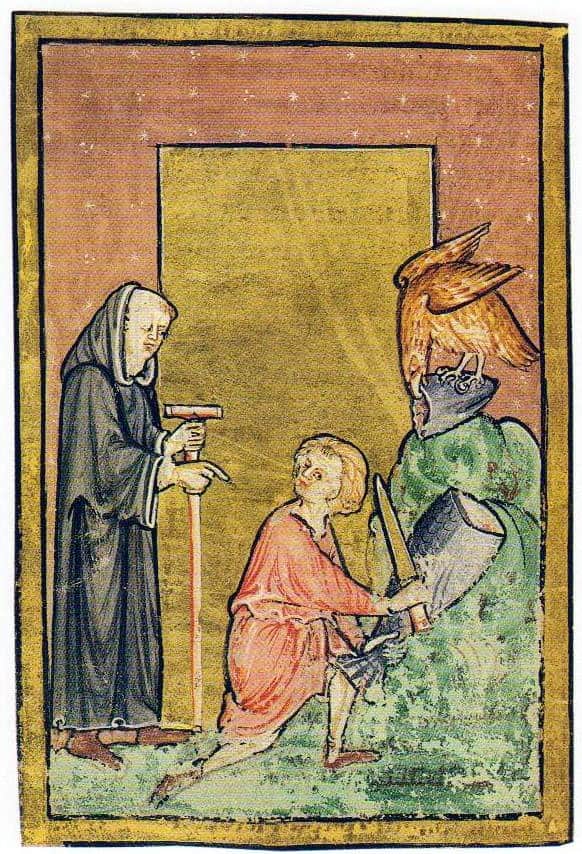
The Raven of Inner Farne: A raven stole thatch from his hut but later returned with an offering of pig fat, which Cuthbert accepted as a sign of penance.
-
Fish from the Sea: He was said to call forth food from the waters, and even after death, fishermen claimed miraculous catches near his resting places.

👆🏻 Click to see larger image! 👆🏻
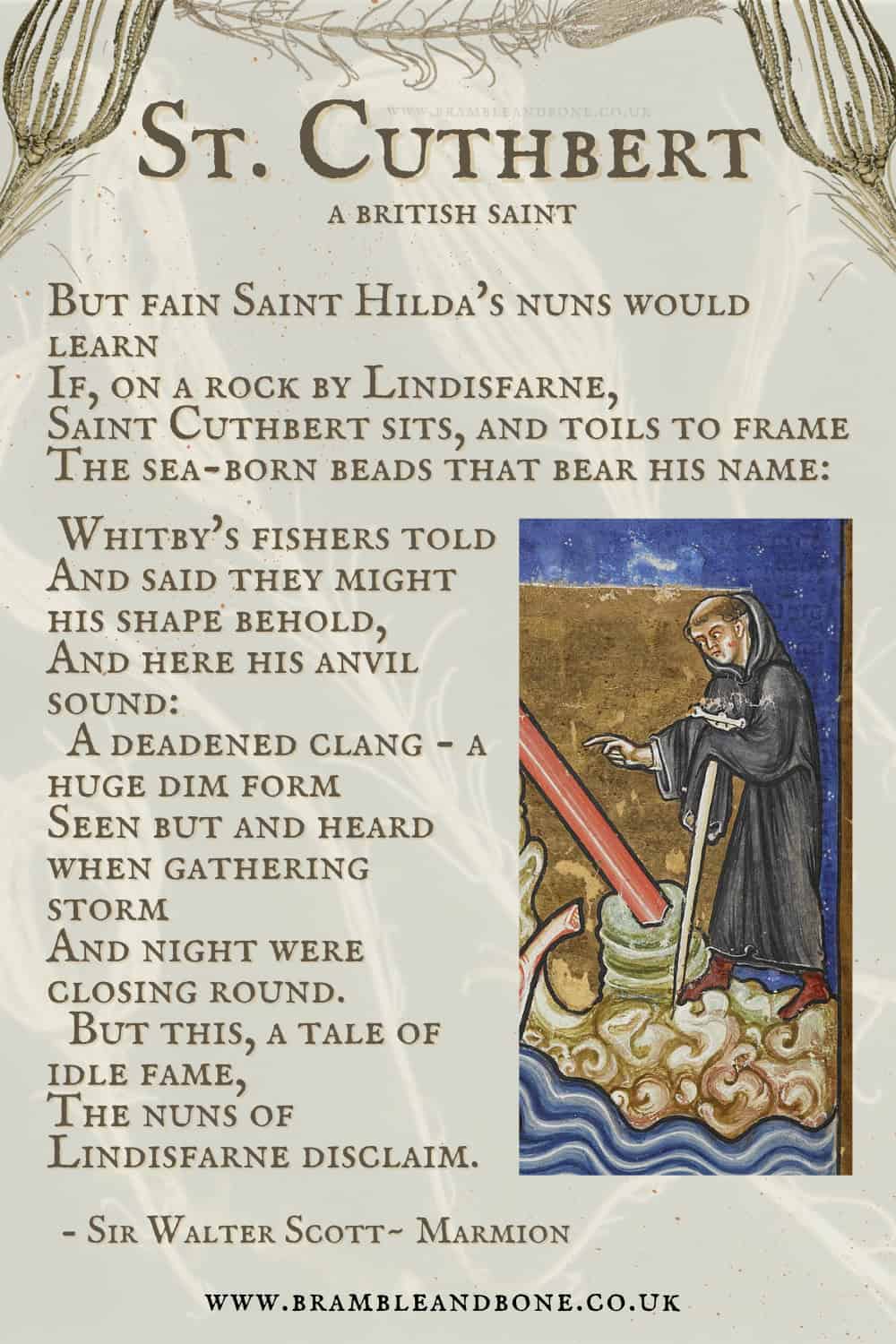
St Cuthbert’s Beads: Fossils and Folklore
A saint who still walks
👆🏻 Click to see larger image! 👆🏻


Bramble & Bone
Our witchcraft shop stocks occult supplies, witchcraft books and spells, and tools for conjure, divination, and spiritual practice.
We offer traditional witchcraft supplies rooted in British folk magic - from saining blends, herbs, books, and tarot, to Indigenous Canting Magic and spellwork essentials.