

Blood, ink, and spellwork: Written Magic in British Traditions

Medieval Charms and the Power of Ink
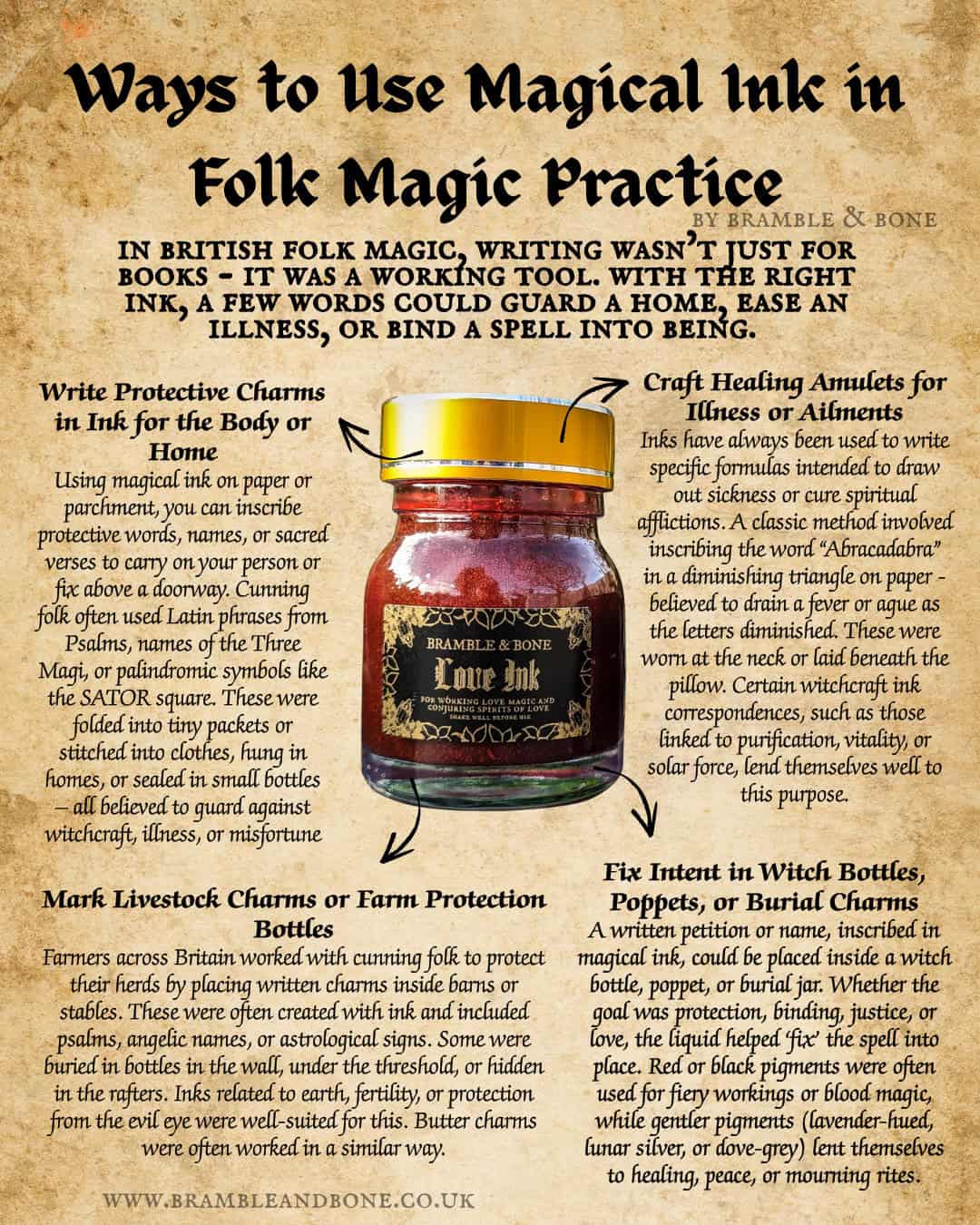
These could be prayers, biblical verses, or mystical characters copied from older traditions.
Cunning Folk and the Trade of Written Charms in Early Modern England
By the 16th-17th centuries, professional folk magicians - the cunning folk or “wise people”- frequently employed ink and paper in their craft. The cunning man’s or woman’s repertoire often included pre-written charms prepared for clients.
Contemporary accounts and later folklore note that one could obtain a written charm for almost any need: finding love, protecting livestock, detecting thieves, or warding off evil.
Charms during this period continue to use Religious elements, older pagan magic (especially amongst Canting Tribe folks) as well as older grimoire materials, which by this point had begun circulating amongst non-gentry. The Abracadabra charm is possibly one of the most famous still used in this period, which we know had also been used by the Romans. (Owen Davies mentions this in his book 'Popular Magic Cunning Folk in English History')
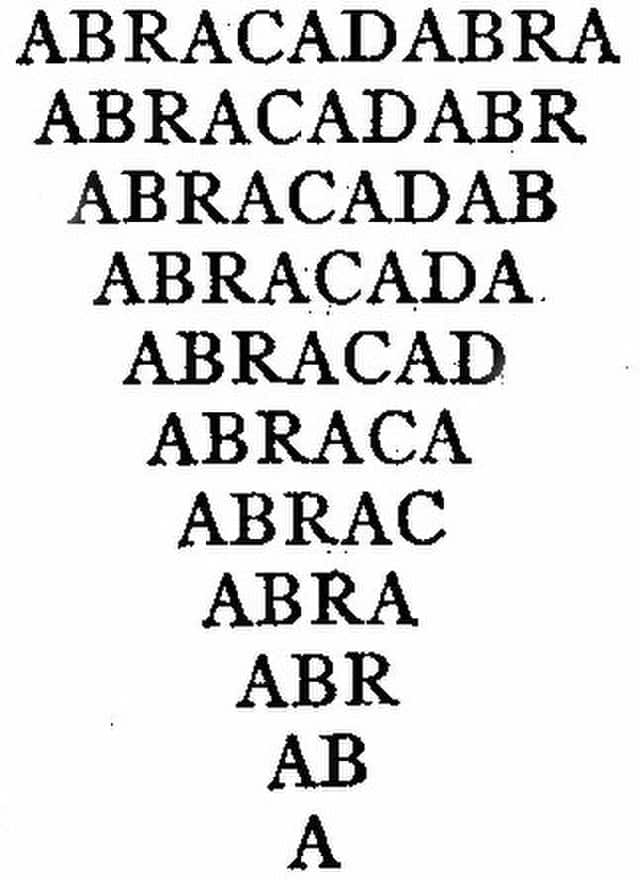
Cunning folk would write “Abracadabra” in a diminishing triangular arrangement on paper and have the client wear it as an amulet to cure fevers or ague. We even have this charm still in recorded use in the 19thC in Essex -sewn into a silk bag and sold for a guinea. (Also mentioned by Davies)
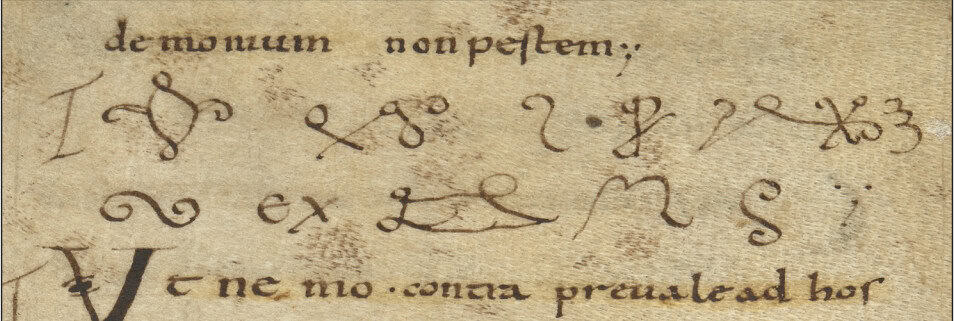
Likewise, charms invoking the Biblical phrase “Omnis spiritus laudet Dominum” (“Let every spirit praise the Lord”), sometimes called the Paracelsian charm, were circulated.reginald Scot published one such formula combining Latin phrases from the Bible as a written house-protection charm. a version of this charm was found around 1900 above a farmhouse door in Lancashire, scrawled in a nearly illegible hand. It read (with misspellings) “Omnes spiritu laudet domnum... exurgrat disipentur inimicus”, clearly a corrupted copy of the Latin Scot gave, and was explicitly meant to be placed over the doorway to protect the home.
These charms were often treated as sacred objects. Clients were instructed to keep the paper secure and secret, often by sewing it into clothing or enclosing it in a little bag or bottle.
Magical Ink Bundle
From £20.25
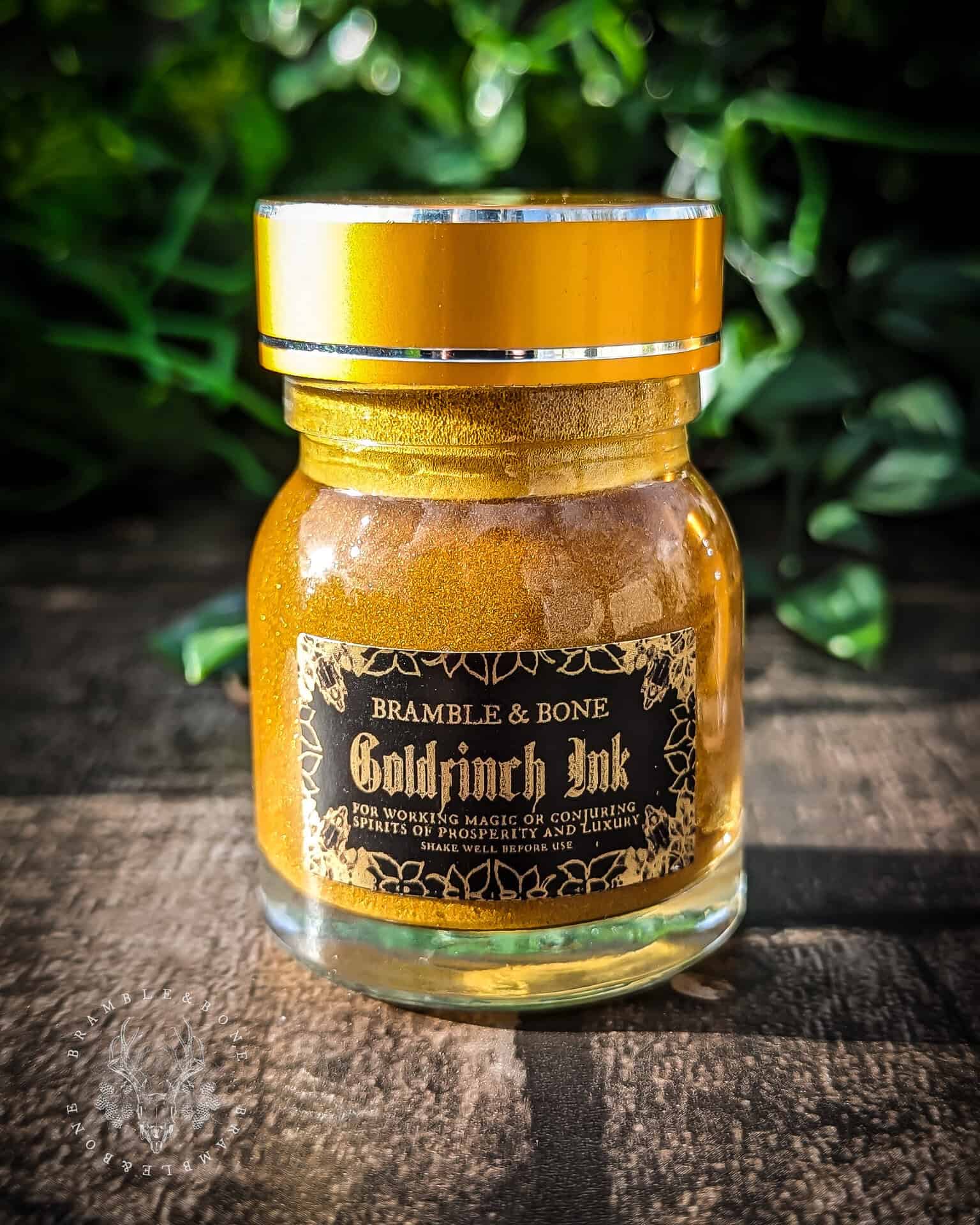
Goldfinch Ink
£12.00Magical Ink and Parchment: Ritual Materials and Methods
The materials and manner of writing were often considered key to a charm’s efficacy. Many English grimoires circulating in the early modern period included recipes for special inks and strict instructions for writing charms. A common instruction was to use virgin parchment - parchment made from the skin of an unborn or never-mated animal - as the surface for writing holy names or conjurations. This was believed to ensure purity and amplify the spell. In 1655, the English occultist Robert Turner even advertised that his London bookshop sold “virgin parchment” and “the best ab*rtives” (unborn animal skins) for those constructing magical documents.
While such expensive parchment was ideal, rural practitioners more often resorted to common paper, except perhaps for very small and special charms.
The ink itself was often ritualised. Standard iron-gall ink (brownish-black) was used for most writing, but some charms specified using animal blood or other substances as ink for extra potency.
The value of the inherent spirit was clear: blood as the life-force could bind the spell more strongly. Even in demonic witchcraft lore, blood as ink had a place- witches were popularly believed to sign their pact with the Devil's book in their own blood. Blood contracts were understood to be more binding and harder to break without consequence, especially as it often links back in with ancestral magic.
The actual way an ink was constructed depended wildly on the tradition of the ink maker. many grimoires came packed with specific recipes, often based on eastern traditions of magic. While folk magic tended to make use of the animistic understanding of the world, utilising herbs, floral waters, native resins and so on. The spirits of these plants within the ink - and other spirits not found within the material of the ink itself- could then be conjured to work the ink so that it would reach it's full, ensouled potency.
Planetary Hours and Sacred Times
fixing, Sealing, reversing and layering
Canting Tribes and the Margins of Magic
Material
Recognition
Marginalia
Inks and Pigments
Inks for Canting Tribe folks was a lot more rugged and less physically refined than inks you may purchase elsewhere due to the nature of the resources available. It would more likely be made from blood, soot, chalk, clays, boiled florals and would not necessarily make use of a metal pen- feather nibs being far more easily sourced.
Lamp Black was a favoured ink amongst Non-Nomadic Tribes, and normal ink could also be 'sourced' more easily by Non-Nomadic Tribes folk if they worked for the Masters in the Big House.
Ultimately, you'd be more likely to find more degradable inks used by Canting tribe folks- which means that the writing might be out there, but would probably need specialist equipment to recognise it.
Clever Jacks
What could be done to bring these charms to light?
An easy way to bring these charms to light is to make the original documents accessible to those who do not attend university. Also providing research funding for those Canting Tribe folks who are studying these subjects (instead of denying funding in a never ending negative cycle).
Allowing everybody digital access to the manuscripts recorded would also aid Canting Tribe folks who are trying their best to preserve their history for the future.
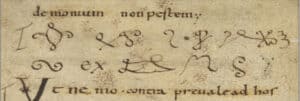
Oh look, a 'gibberish' charm.
Ink magic in the modern Era
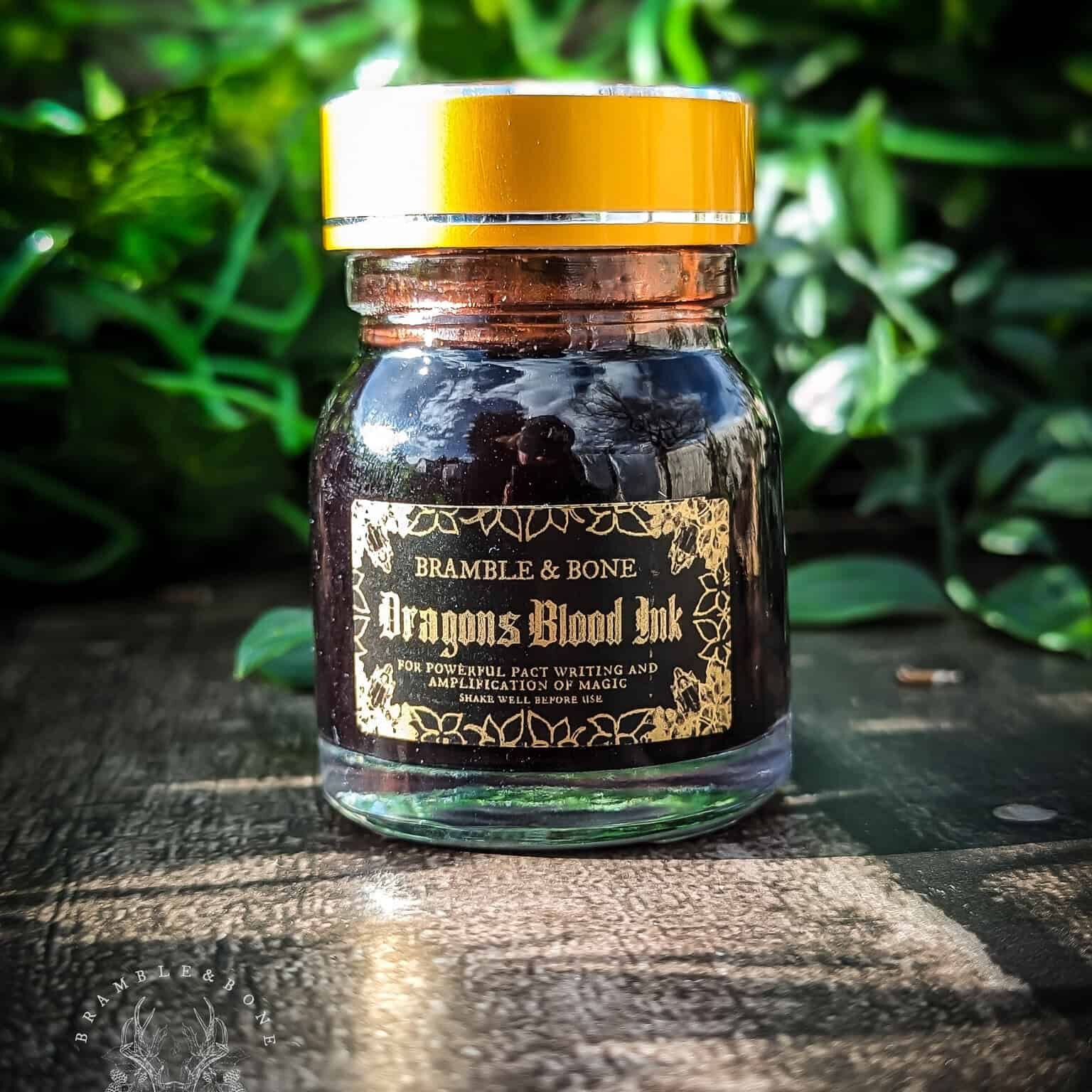
These days within magical practice, we have access to more pigments, plants, oils and resins than at any other time in history. But handmade magical ink - especially those made from plants themselves - has become something of a rarity. Folk magic inks, once crafted with care and spirit, are now overshadowed by quicker alternatives. Ceremonial inks have held on a little more firmly, but even then, many so-called “dragon’s blood inks” are little more than red dye, with no resin at all.
Crafting inks is a time consuming process, and so even though we've now got more access to the materials, we now have lost access to the other precious commodity- time.
But the layers of magic within a page are vital, and shouldn't be lost to history. The ability to craft a whole spell or ritual with a few words and the right inks is a powerful tool that shouldn't be forgotten. If you already love colour symbology in your workings, or already know that a certain spirit you work with has a preference for offerings in a certain colour- then magical inks is the next step to further layer in spirit work and magic and deepend devotional work.
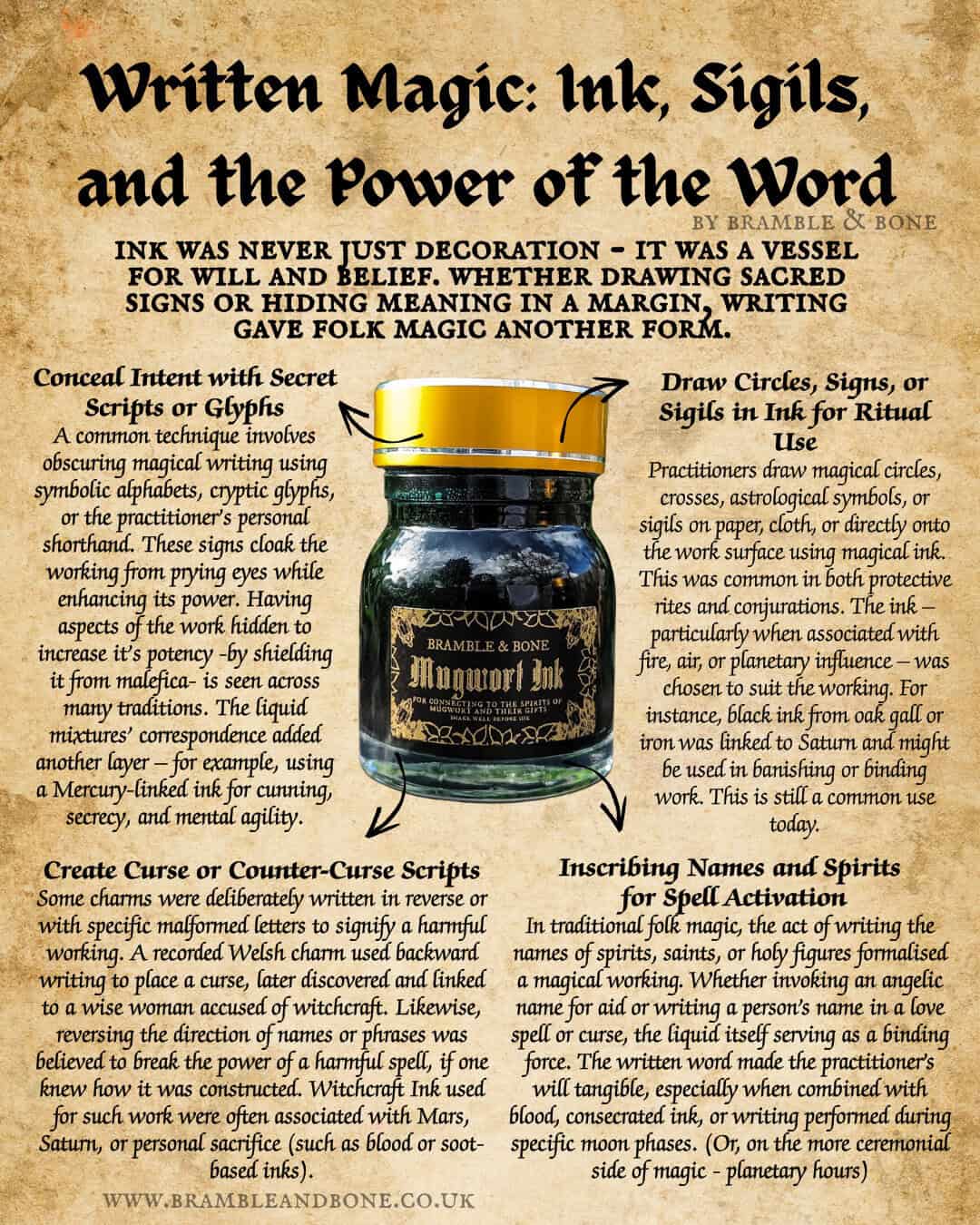
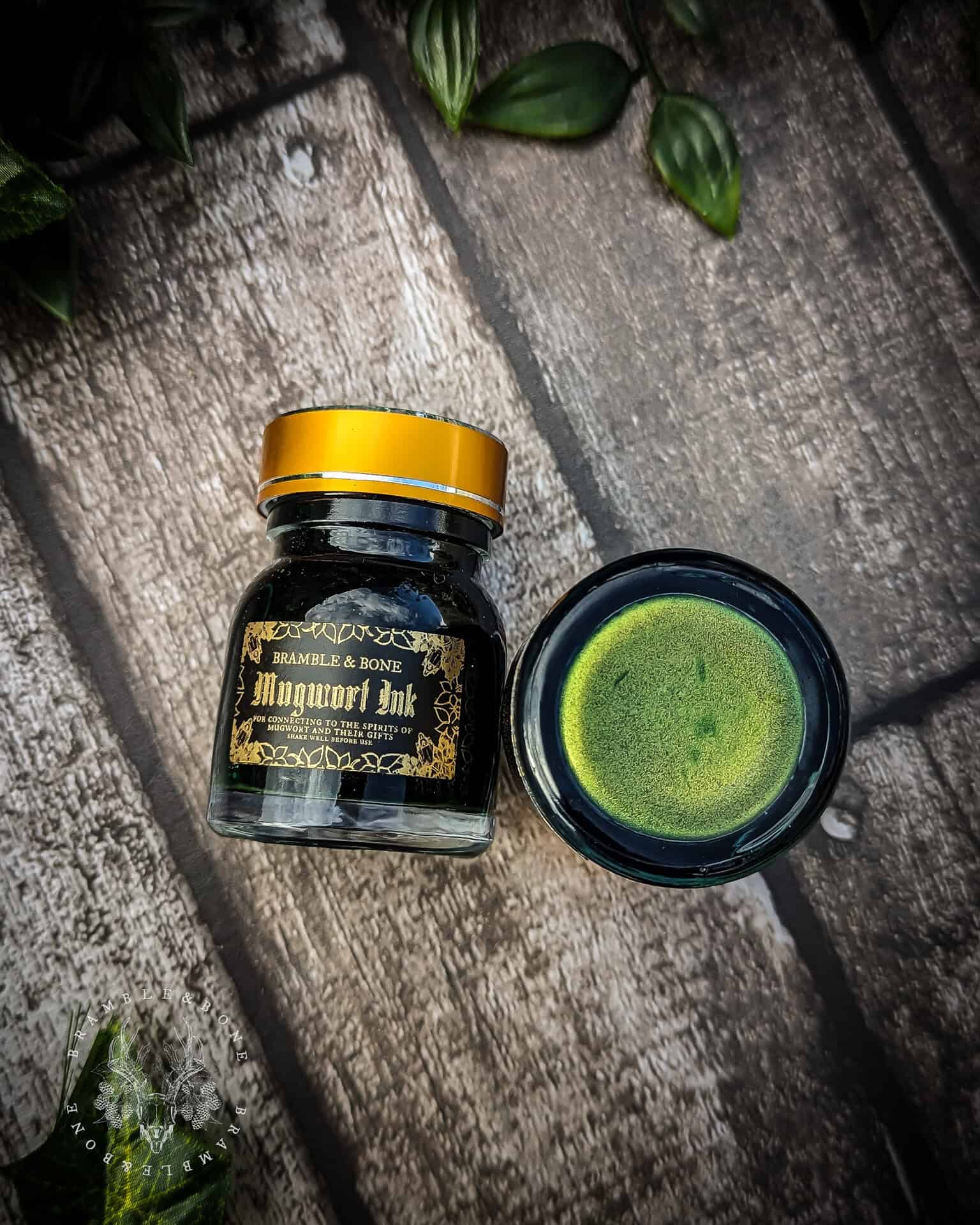
If you have a spirit who works with dream and prophecy, and their favoured colour is green- go for a mugwoprt ink for their petitions. Want to work with Apollo for abundance? Go for a Gold goldfinch ink. If you're a painter- use inks in your artwork and make whole pieces devotionmal and magical.
There is so much you can do with magical pigments.
So we’ve brought some of that world back to life. Drawing on Canting Tribe traditions, we craft inks in the old way - working directly with the plant spirits, conjuring with them, charging the ink so it carries a living current. Just as generations before us did.
That way you get to enjoy using inks and explore the full depth of written charms without having to scrape soot off of a lamp casing or boil up mugwort and stir in resin for hours.


Bramble & Bone
Our witchcraft shop stocks occult supplies, witchcraft books and spells, and tools for conjure, divination, and spiritual practice.
We offer traditional witchcraft supplies rooted in British folk magic - from saining blends, herbs, books, and tarot, to Indigenous Canting Magic and spellwork essentials.