
A Liminal Legacy - Dunstan at the Doorway
A short look at St.Dunstans main myths and life story.

St. Dunstan has never been easy to place. Born around 909 in Wessex, buried with reverence in Canterbury, he was in turn a monk, a blacksmith, a court adviser, and an Archbishop- and in the centuries since his death, something stranger still. What made him endure in the British imagination long after more celebrated saints had faded was the contradictions he embodied - and never resolved.
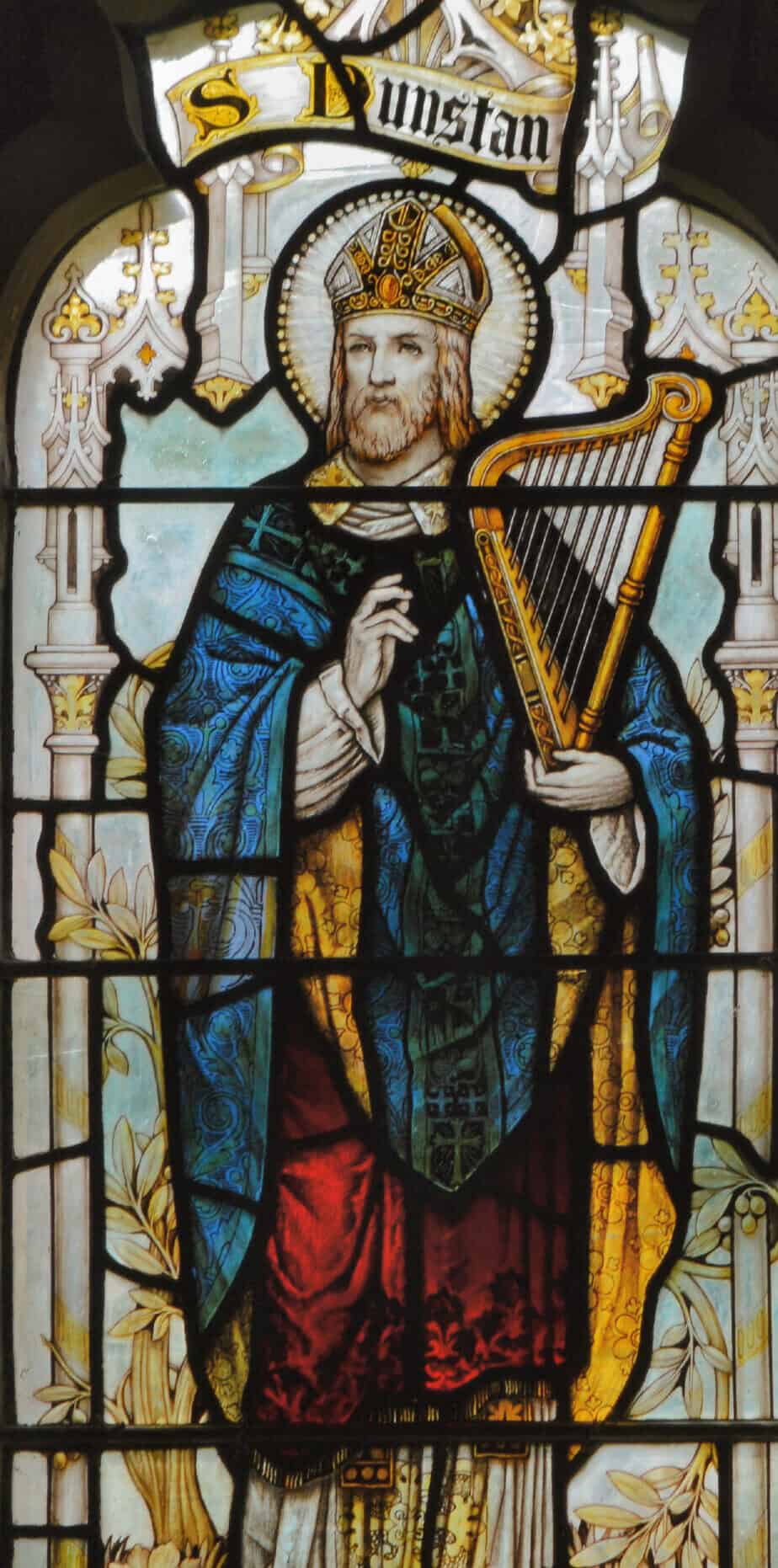
To the Church, he was a reformer who reshaped Benedictine monastic life and counselled kings. To the forge workers who hammered iron in his name for centuries after his death, he was something else entirely: a saint who understood the weight and preciousness of metal, who could grip hellfire with his bare tools and walk away unshaken. To those in the cunning tradition, he was a trickster-saint, as capable of making a pact with the Devil as outwitting him.
That tension - between the sacred and the practical, the ecclesiastical and the earthly - is the legend. He endured because he was a liminal figure, and in British folk culture, the threshold has always been where power lives.
In this post, we’ll look at Dunstan as a man of doorways - moving between court, monastery, forge, and folklore - and why his stories gathered so naturally around iron, political confrontation, saintly power, and the guarded threshold.

The Historical Dunstan: Forge, Throne Room, Monastery
Dunstan's early life reads like a rehearsal for the contradictions to come. Raised in a noble West Saxon family with close ties to the royal court, he was schooled in music, the arts, and metalwork - an unusual combination that would shape his later reputation entirely. His love of the forge was genuine. Even after rising to Archbishop of Canterbury in 960, accounts describe him continuing to craft liturgical items and tools by hand.
That formation began at Glastonbury, where Dunstan grew up immersed in both royal politics and monastic scholarship. His uncle was a bishop; his family had close ties to the West Saxon court. Glastonbury in the early 10th century was one of the most significant ecclesiastical sites in England, and Dunstan absorbed its culture of accumulated, practical learning before he ever moved into the wider world.
That wider world demanded things of him that most churchmen wouldn't have attempted. Rising through the ranks to become Abbot of Glastonbury, then Bishop of Worcester, Bishop of London, and Archbishop of Canterbury in 960, he was never the kind of churchman who stayed on one side of any line. In 955, when the newly crowned King Eadwig abandoned a royal council mid-session, Dunstan went looking for him, found him in circumstances that were deeply improper, and dragged him back to face his duties in front of the assembled court. The fallout was immediate: Eadwig's allies turned on Dunstan, and he was exiled.
This was not a small act of moral correction. Dunstan had stepped into the doorway between royal authority and ecclesiastical discipline, and he paid for it with exile.
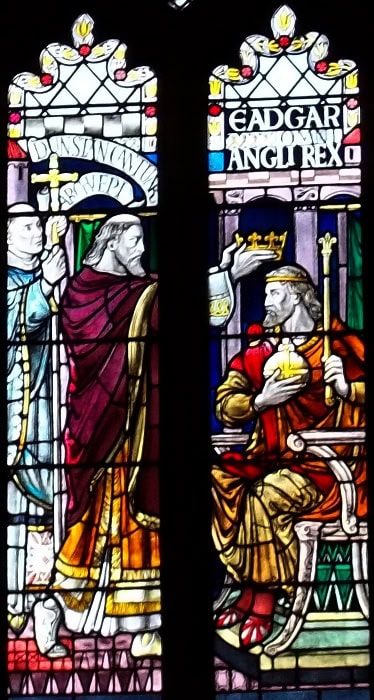
Those years in enforced monastic retreat are when many of his stranger encounters were said to occur - as though removal from court and cathedral left him in a liminal space where other forces could make themselves known. When Edgar took the throne, Dunstan returned with greater authority than he had left with. The man who crossed a king, lost everything, and came back stronger carried the same quality to every threshold he stood at: he worked adversity rather than enduring it.
In Anglo-Saxon cultural understanding, the blacksmith already occupied a liminal role. Working with fire, shaping raw ore into tools, weapons, and objects of beauty, the smith stood at the edge of the natural and the made - respected, a little uneasy to be around, and understood to deal in forces that ordinary people didn't handle. Dunstan absorbed that archetype entirely. He was, from first to last, a man of the threshold.
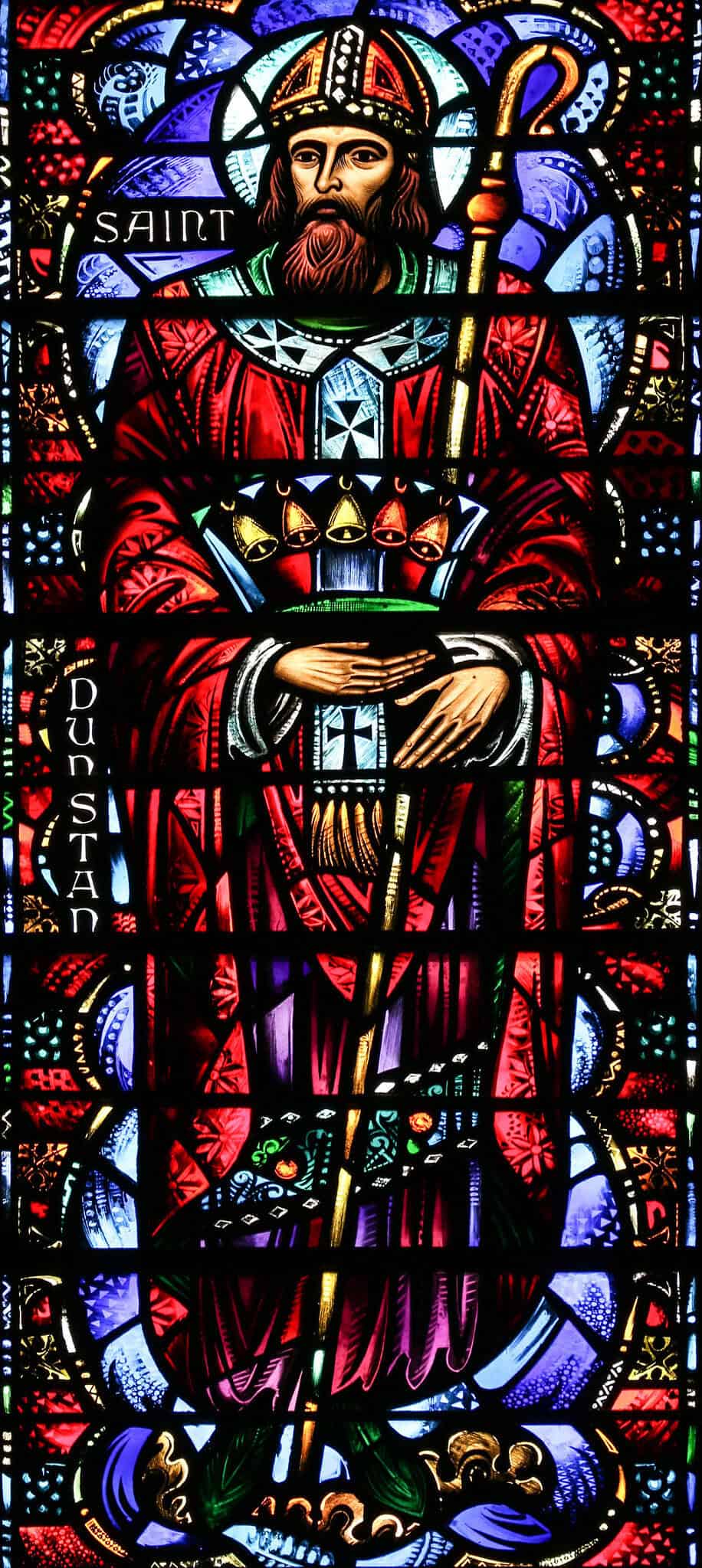
What that looked like in practice was unusual. He crafted church bells, goldwork, and liturgical objects - not as a young apprentice but throughout his working life, including his time as Archbishop. The British Library's manuscripts record him as skilled across gold, silver, iron, and bronze, as well as music, illumination, and embroidery. Contemporaries described him as genuinely, practically gifted - a man whose hands were as important as his prayers. That combination - the highest ecclesiastical office in England, paired with soot on his sleeves and calluses from the hammer - was unusual enough to define him long after his death.
The Devil at the Threshold: Iron, Tongs, and a Bargain at the Door
Of all the legends that gathered around Dunstan after his death, the most enduring involves fire, iron, and a very bad day for the Devil.
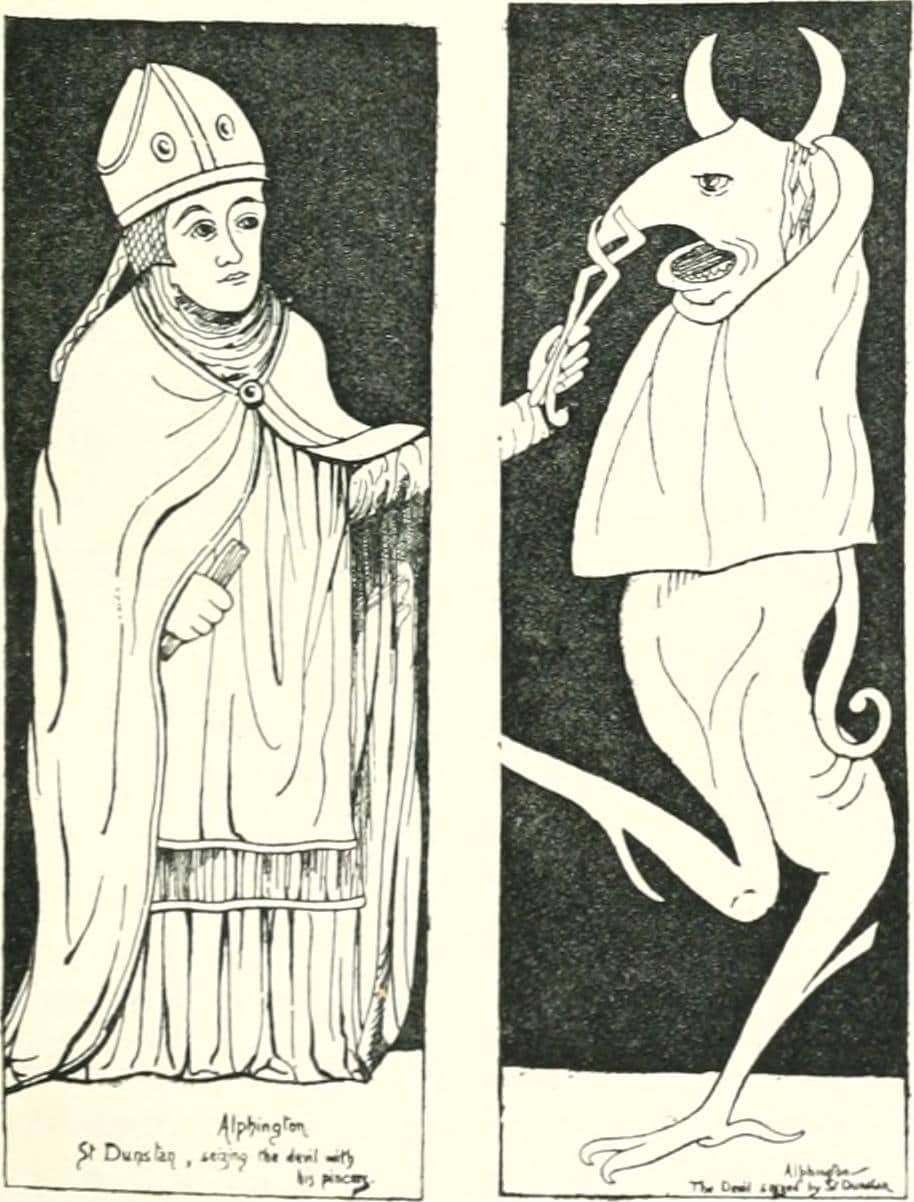
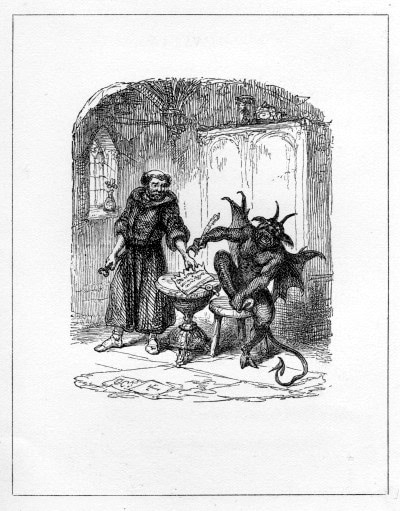
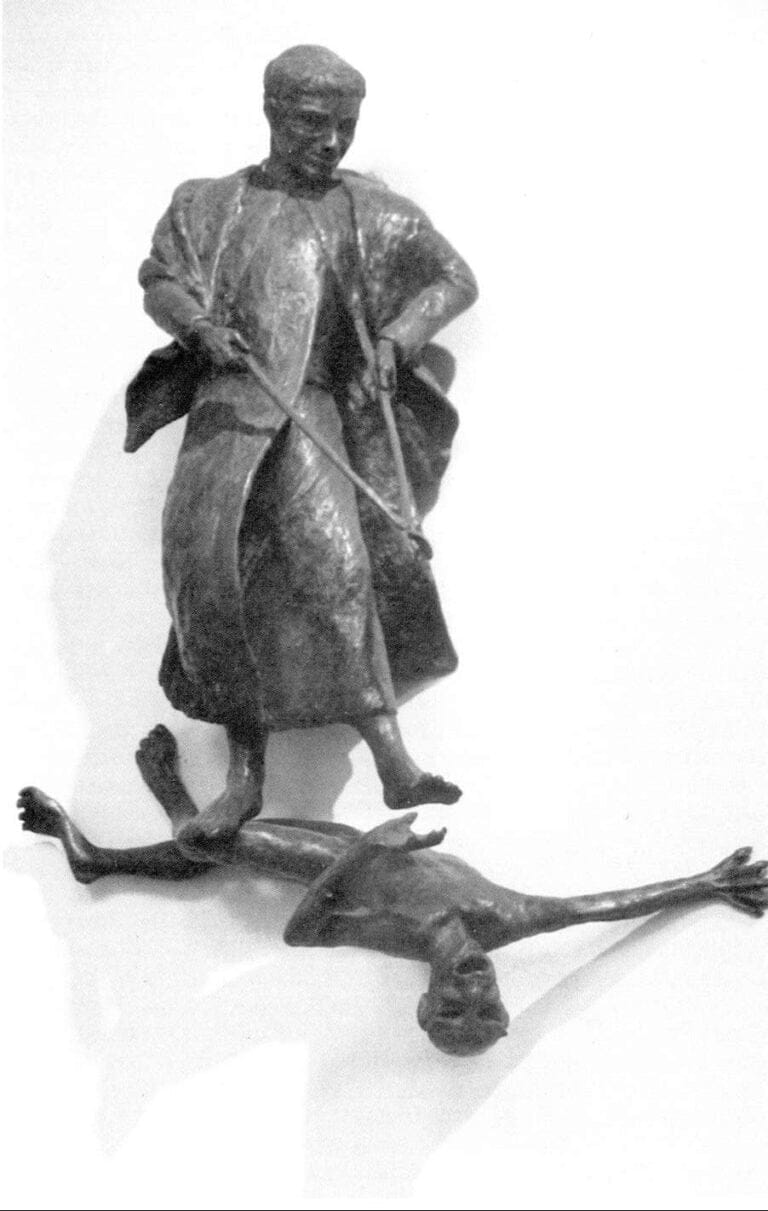
The core version runs as follows: the Devil appears at Dunstan's forge, disguised as a weary traveller - or in some tellings, as a seductive woman. Dunstan notices something wrong: a cloven hoof beneath the hem, the smell of sulphur in the air. He keeps working. When the tongs glow the right shade of red, he turns and clamps them straight onto the Devil's nose. The scream, folk tradition tells us, was audible for miles. A traditional verse preserved the memory:
St Dunstan, as the story goes, Once pull'd the devil by the nose With red-hot tongs, which made him roar That he was heard three miles or more.
The Devil fled - and in some versions, stumbled away with the tongs still clamped to his face, shedding sparks across the countryside as he ran. Dunstan went back to work.
It is an almost absurd image - a bishop-blacksmith in his apron, casually defeating the Prince of Darkness with the tools nearest to hand - and the sheer practicality is precisely what makes the legend persist. Dunstan doesn't reach for relics or invoke a choir of angels. He uses his tongs - the weapon is the forge itself.
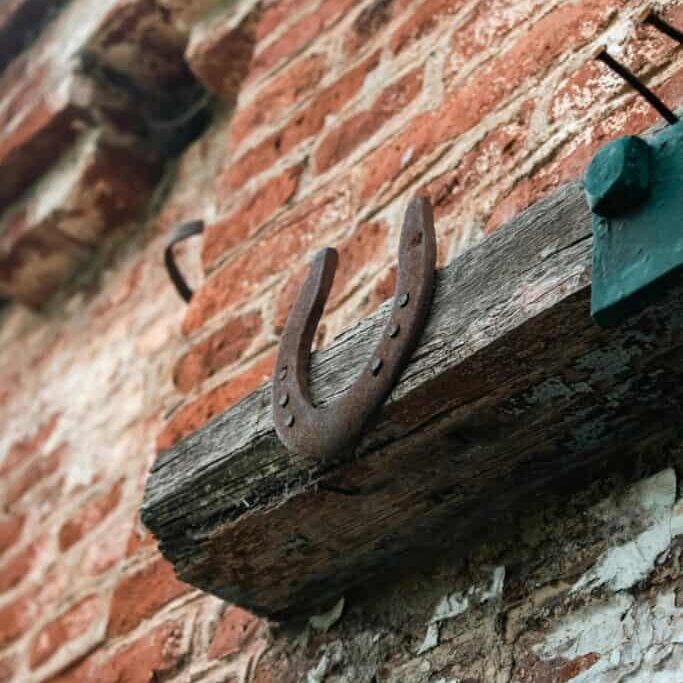
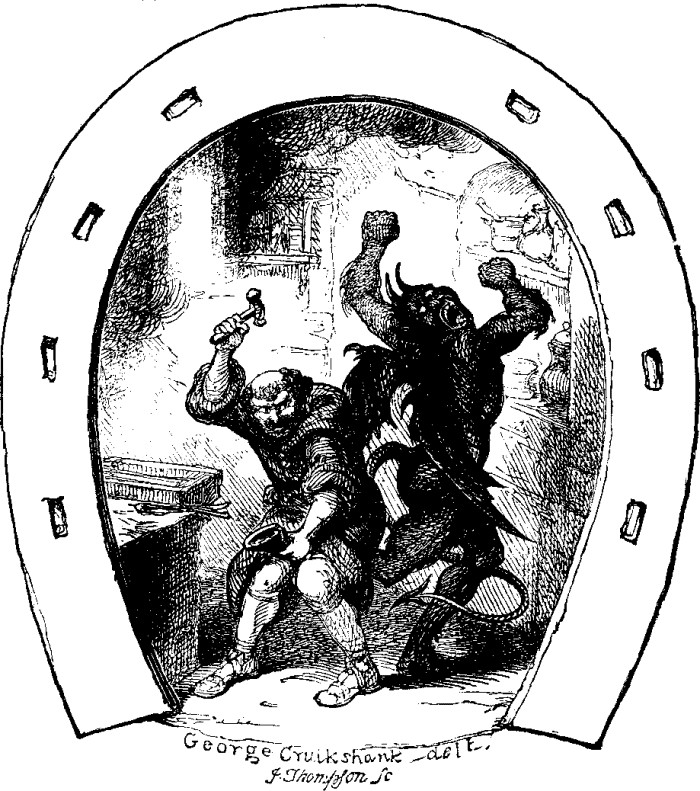
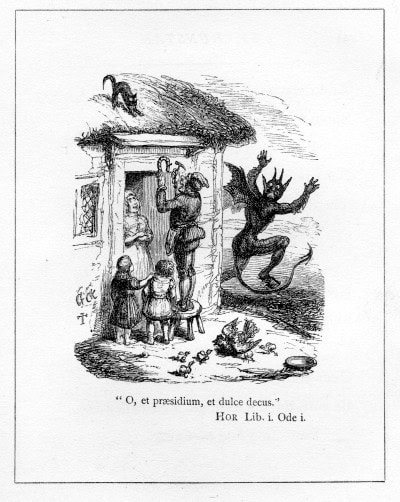
In a second tale, the Devil arrives not in disguise but with a request: he wants his hoof shod. Dunstan agrees - and shoes it with deliberate, excruciating care, driving the nails in deep. With the Devil crying out in pain, Dunstan extracts a promise: the Devil will never enter any dwelling that bears a horseshoe above the threshold. Only then does he remove the nails and let the devil limp away.
The tale explains one of the most persistent protective charms in British folk practice. The horseshoe above the door is Dunstan's pact made material - iron fixed at the threshold, the Devil's own promise repeated every time a nail meets wood.
Iron already carried protective aspects and spirits in British and wider European folk belief long before Dunstan’s legend took shape. Worked in fire, shaped by hand, and fixed at vulnerable places, it belonged naturally to thresholds - doors, ships, stables, beds, and bodies. Dunstan gave that older instinct a Christian name, a memorable story, and a pact that could be repeated every time a horseshoe was nailed above a door.
These attributes placed the Blacksmith in a similar understanding within the minds of many to the cunningfolk- a worker who works with both the living and the uncanny- touching both worlds. And this too reflected on St.Dunstan and his works.
By the early modern period, the protective horseshoe had become so well-documented that antiquarians were recording it with some astonishment. John Aubrey noted its use in the 17th century; William Hone catalogued it widely in the early 19th. Both observed the charm across homes, taverns, stables, and ships - particularly in the south of England and coastal regions, where a horseshoe nailed to a vessel's mast was considered standard protection against storms and malevolent forces. This tradition still survives today.
Iron nails driven with intention have held a bargain against the Devil himself.
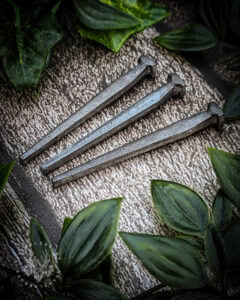
Iron Nails (Traditional Rosehead Steel) 2 1/2″
£1.20
In stock
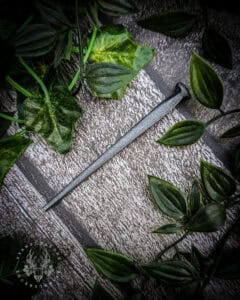
Iron Nails (Traditional Rosehead Steel) 4″
£2.20
In stock
The Forge in Folk Memory: A Saint You Work With
Dunstan's feast day falls on the 19th of May - a date that was, at his peak, one of the most widely kept celebrations in the English Church. Before the cult of Thomas Becket overshadowed him, Dunstan was considered England's favourite saint.
Blacksmiths raised toasts to him on his feast day. Forges paused for prayers. Workshop corners held small images of the saint, blackened with soot but never removed. There's a tradition that sparks from the anvil on May 19th would ward off evil for the coming year - a small ritual requiring nothing more than the work already being done.
Even outside the formal calendar, he was celebrated and interacted with. The feast day also persisted in oral tradition outside of the church: a Somerset saying held that "Till St. Dunstan's Day be past, there may be apples or there may be frost" - a line that tied the saint not just to the Church but to the uncertainty of spring planting. The day was, for people who worked the land, as much a weather marker as a holy day. This is also seen in other myths of his, where he made pacts with the devil for good farming.
While St. Clement of Rome holds the official title of patron saint of blacksmiths in formal Church calendars - a connection based on his anchor-weighted martyrdom rather than any actual craft work - it was Dunstan who the smiths actually claimed. He didn't hold the trade symbolically- he lived it. He made the horseshoes for the farmers, he crafted the bells for the churches, he forged the iron nails that would hold together the fences and barrows. He was a Saint that worked with the communities around him.
However, his patronage extended well beyond the blacksmith's fire: goldsmiths, jewellers, locksmiths, and - perhaps most unexpectedly - bell-ringers all claimed him as their own. The connection to bells runs deep: Dunstan was said to have crafted bells himself, and in folk belief, bells carried the same protective force as iron. They rang out storms and drove away spirits. A bell and a horseshoe worked on the same principle - metal, shaped by hand and hung with intention, keeping what should not enter from crossing the threshold.
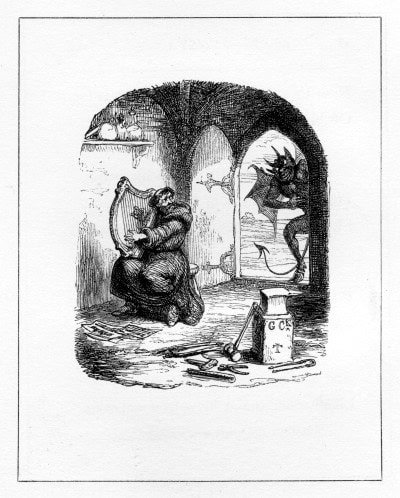

In London, the Worshipful Company of Goldsmiths staged elaborate feast-day pageants in his honour well into the early modern period. In 1687, a full procession accompanied the inauguration of Sir John Shorter as Lord Mayor - at its centre, a cart built to resemble a forge, an actor in episcopal robes holding golden tongs, another dressed as the Devil rushing the stage to be dramatically clamped. The 1687 procession was the grandest version of a tradition stretching back at least to the early 15th century. Records from that era describe the Goldsmiths' Company keeping dedicated costumes and props for "mummings" - public performances with masked characters specifically for re-enacting the Dunstan legend. In one recorded instance from around 1430, poet John Lydgate was commissioned to write a performance piece for the Company, almost certainly tied to the Dunstan feast. The continuity runs deep - centuries of retelling, and a guild that kept a Devil costume and a bishop's robes in storage, year after year, ready to stage the saint's greatest moment on cue.
His power is practical - you engage with it through iron, through craft, through the deliberate acts of threshold protection that have always mattered in this tradition.
Power Lives at the Threshold
Dunstan endured through the Reformation and holds fast in today's understanding because the threshold is where he always stood - between history and legend, the forge and the cathedral, the sacred contract and the infernal bargain, the Church that canonised him and the cunningfolk who kept his stories alive in rhyme and iron long after the public keeping of his feast had faded.
That liminality is the source of his power. Threshold figures - the blacksmith, the cunning woman, the midwife, the sin-eater - have always held particular weight in British folk tradition, precisely because they move between worlds that others don't cross. Dunstan did it his whole life, and in death continued to do it: a saint whose ghost walked out of his own tomb to warn of danger, who intervened in the affairs of the living with the same unsentimental directness he'd used at the forge.
The horseshoe is still there in homes across Britain, the iron still hanging. The Devil's promise - extracted with a pair of hot tongs and a smith's steady nerve - still technically stands.
Some saints ask you to pray to them.
Dunstan, characteristically, asks you to do the work.
Primary & Medieval Sources
- Osbern of Canterbury, Life of St Dunstan (c. 1090s)
- Eadmer of Canterbury, Life of St Dunstan (c. 1100s)
- Memorials of Saint Dunstan, ed. William Stubbs (Rolls Series, 1874)
Historical & Folklore Sources
- John Aubrey, Miscellanies (1696)
- William Hone, The Every-Day Book (1826)
- Walter Thornbury, Old and New London, vol. 2 (Cassell, 1878)
Online
- A Clerk of Oxford: aclerkofoxford.blogspot.com
- British Library Medieval Manuscripts Blog: bl.uk

Bramble & Bone
Our witchcraft shop stocks occult supplies, witchcraft books and spells, and tools for conjure, divination, and spiritual practice.
We offer traditional witchcraft supplies rooted in British folk magic - from saining blends, herbs, books, and tarot, to Indigenous Canting Magic and spellwork essentials.