
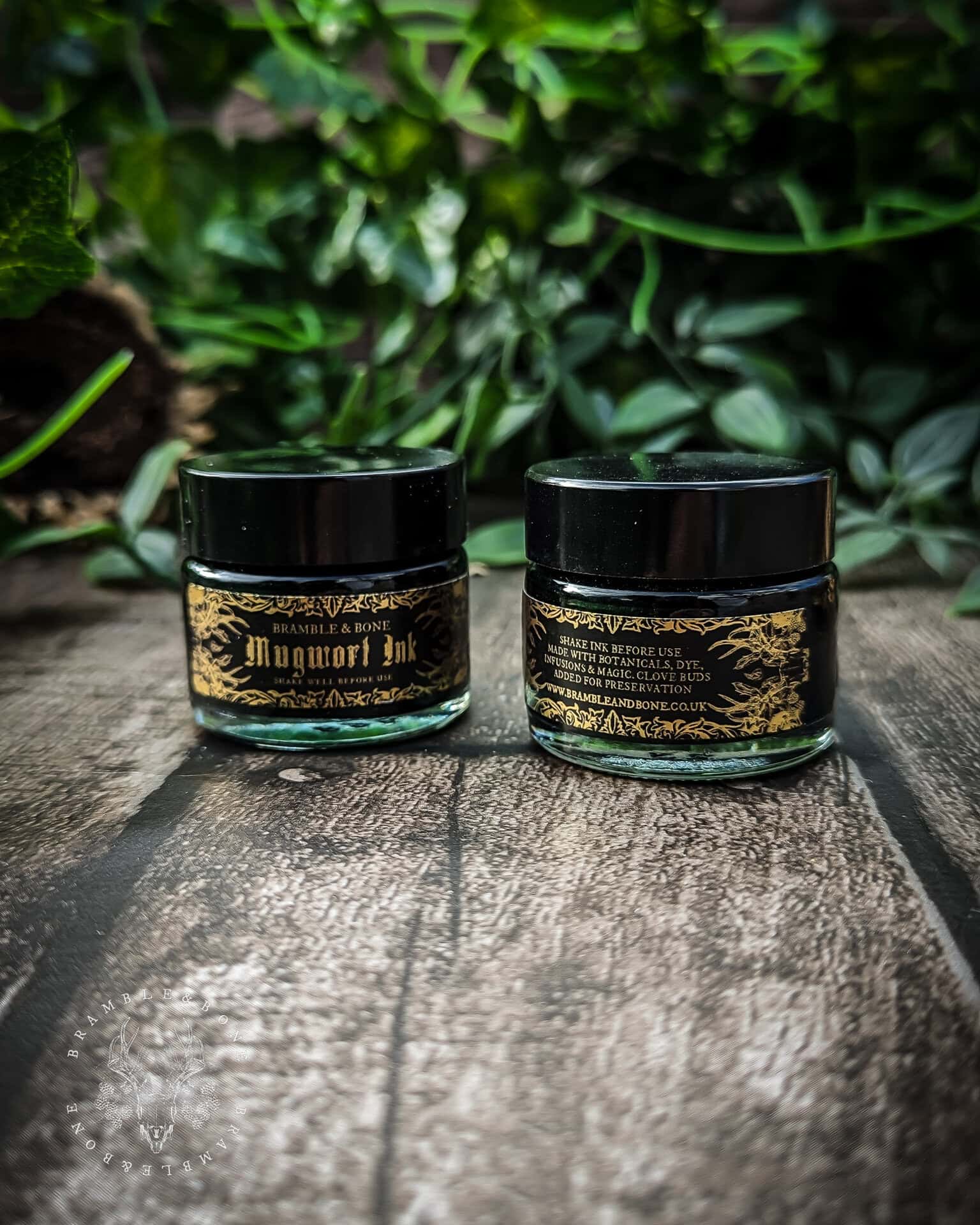
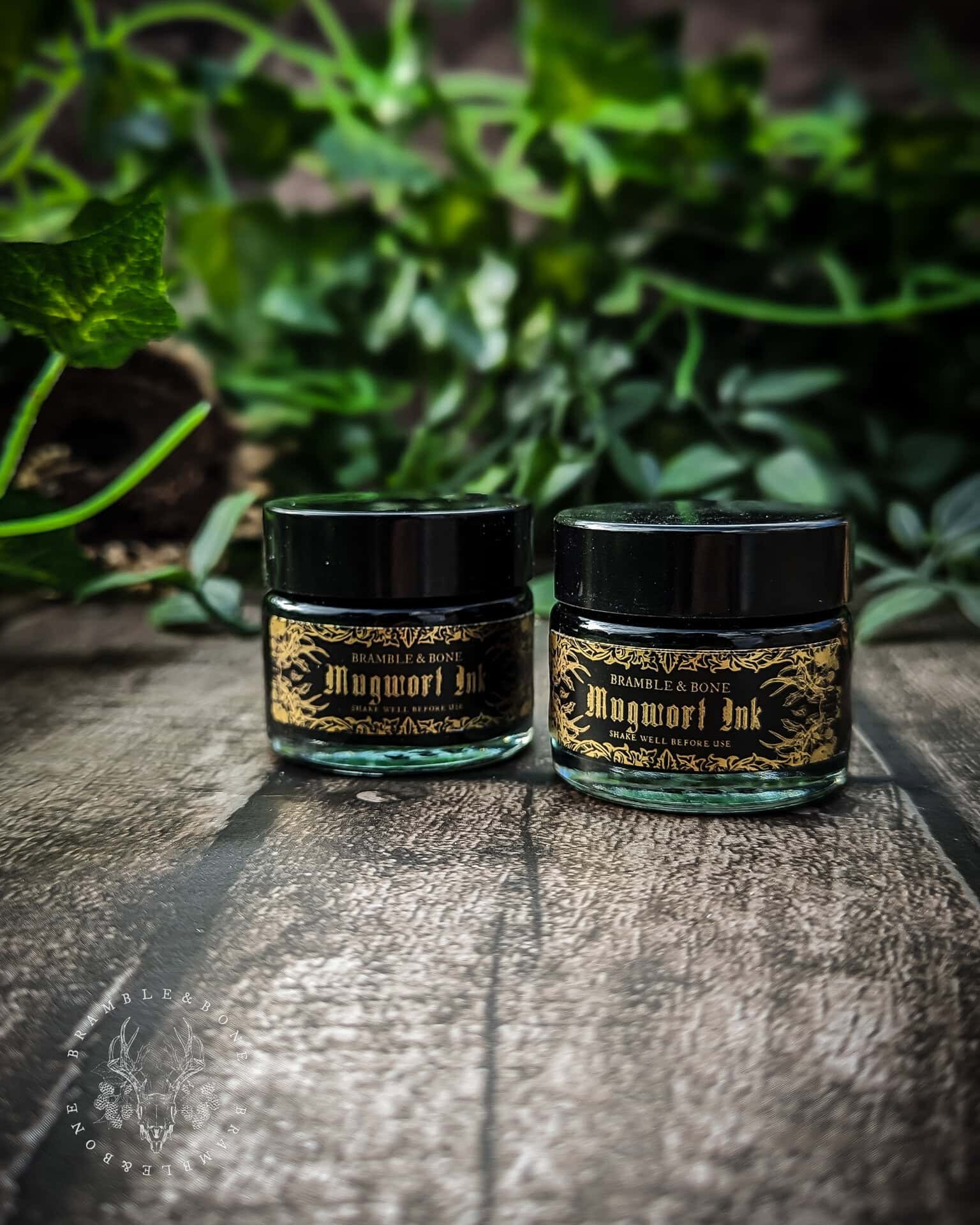
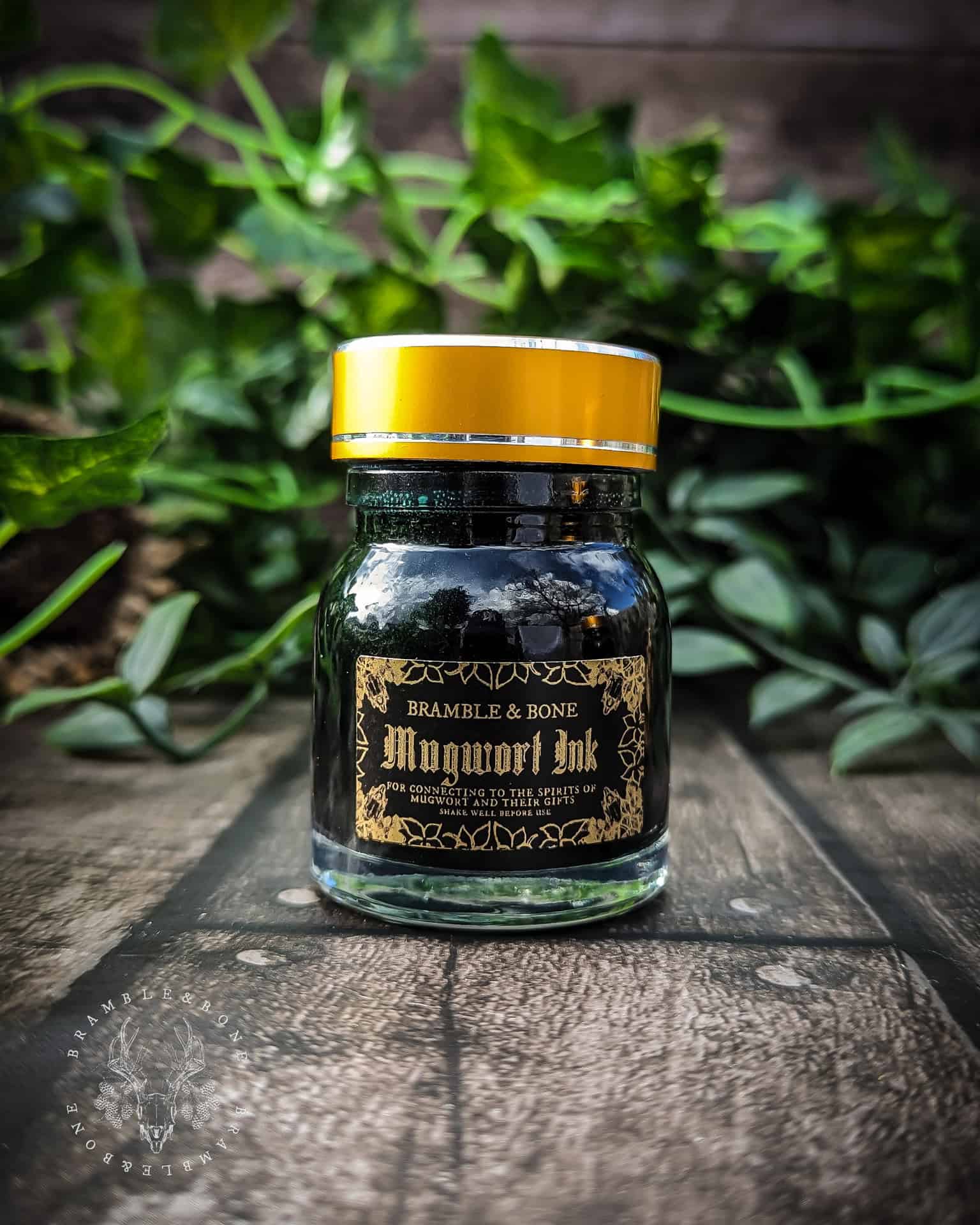
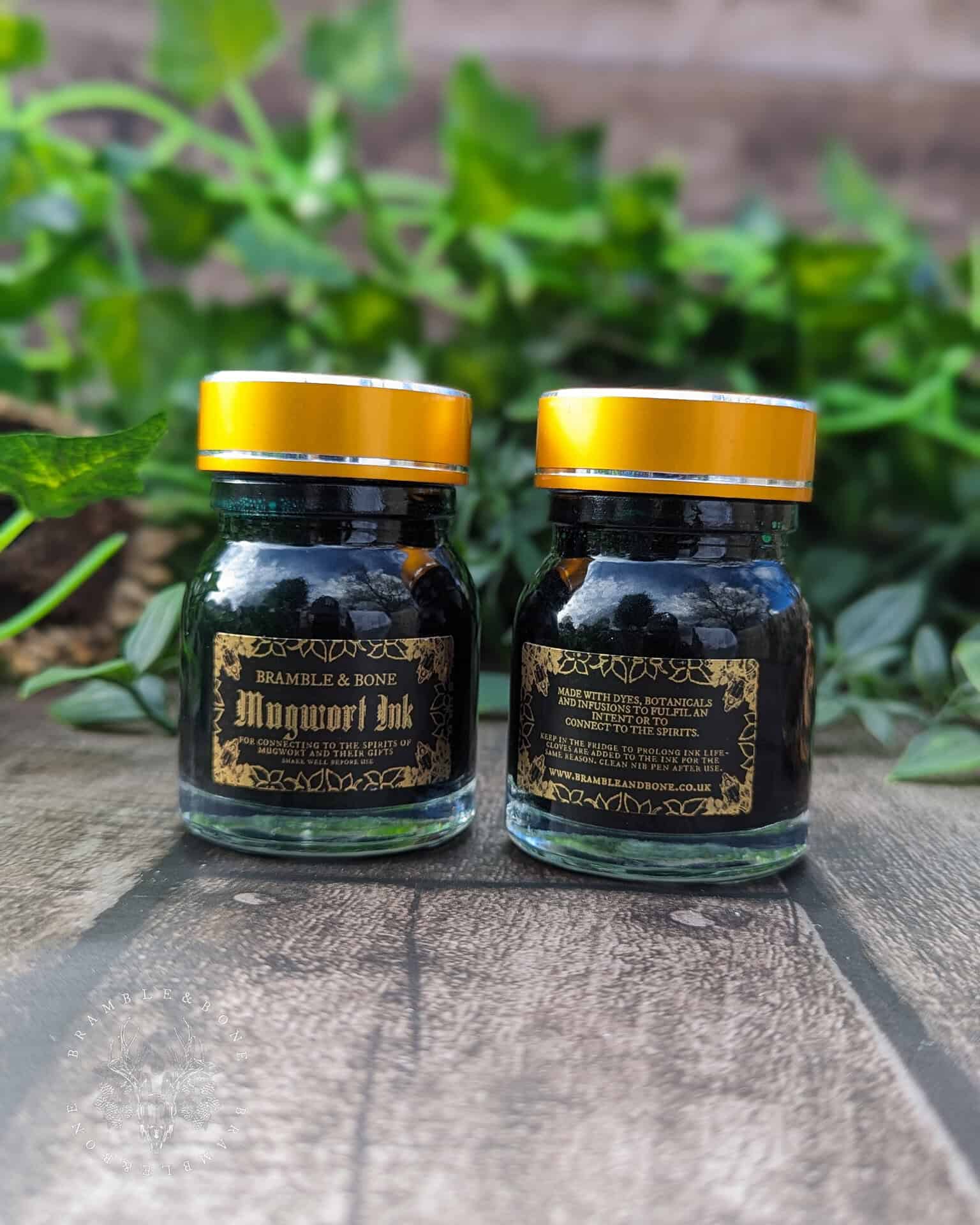
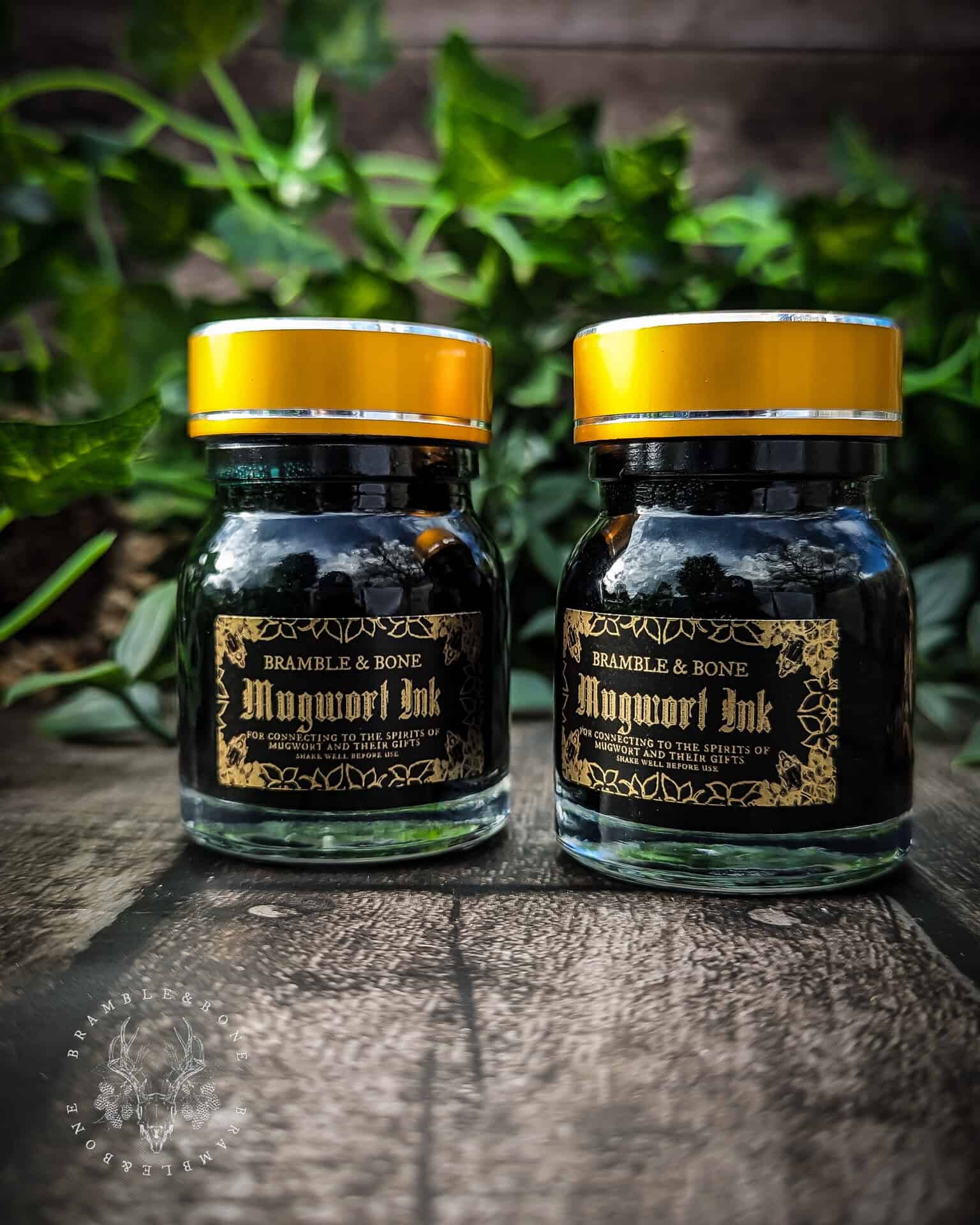
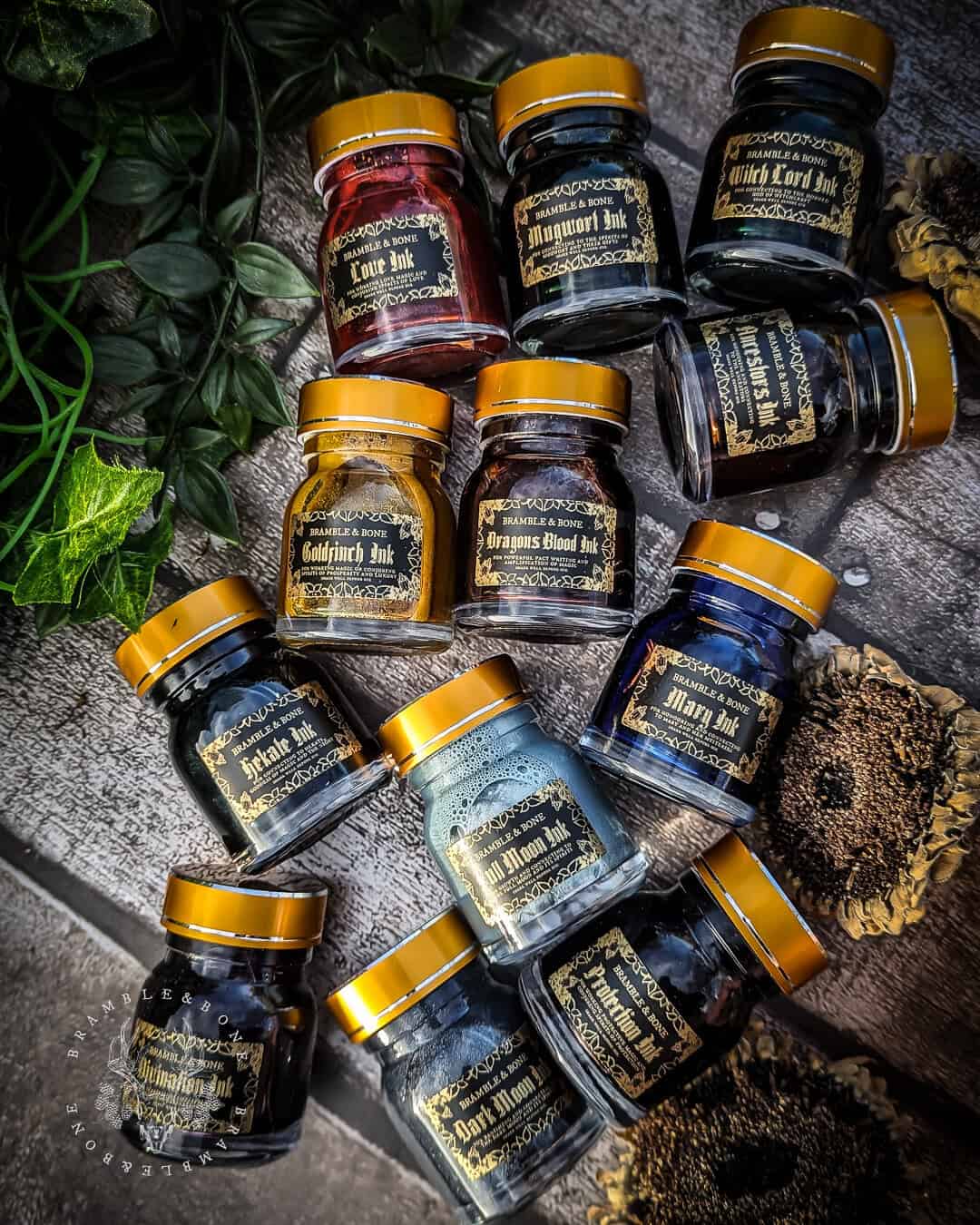
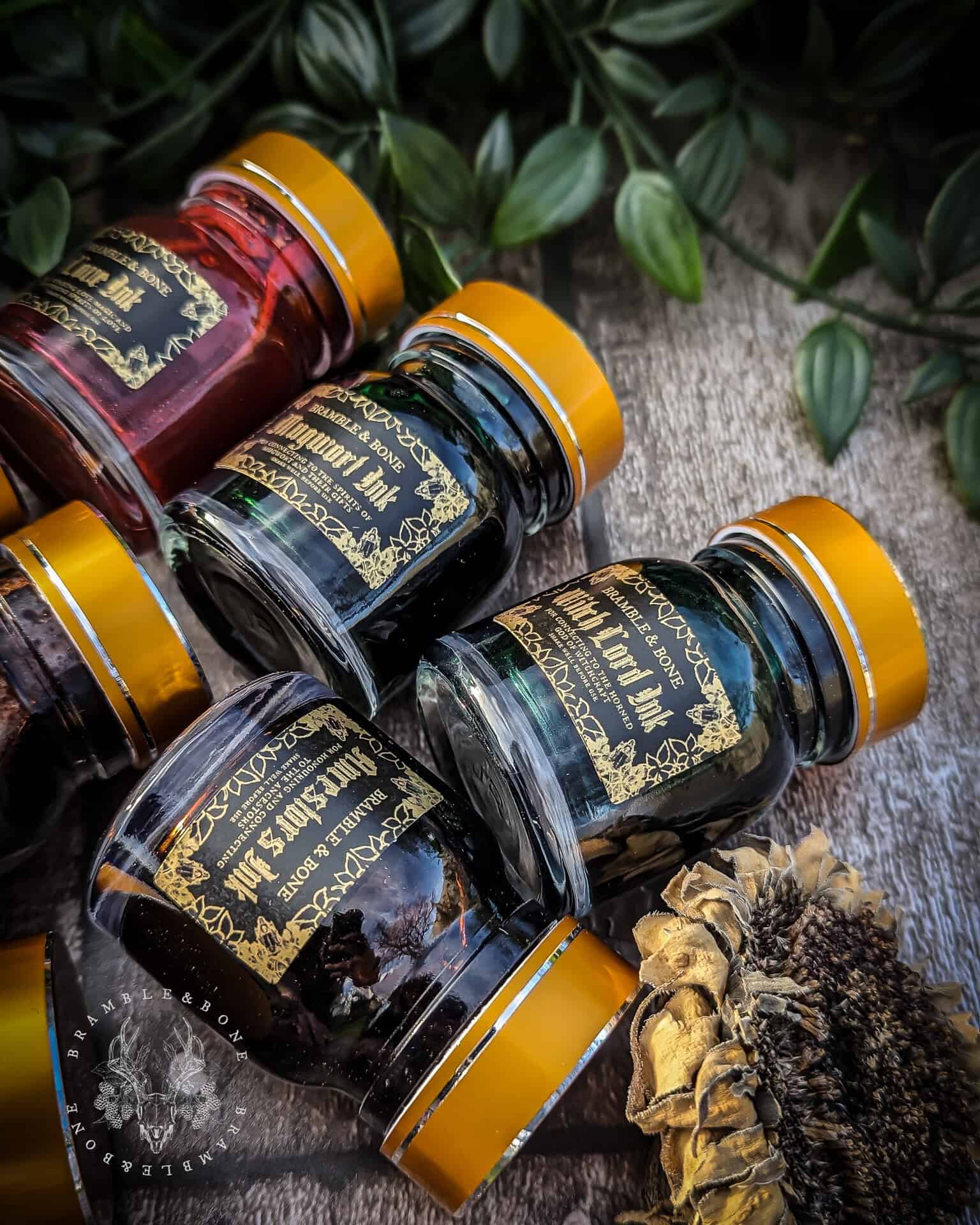
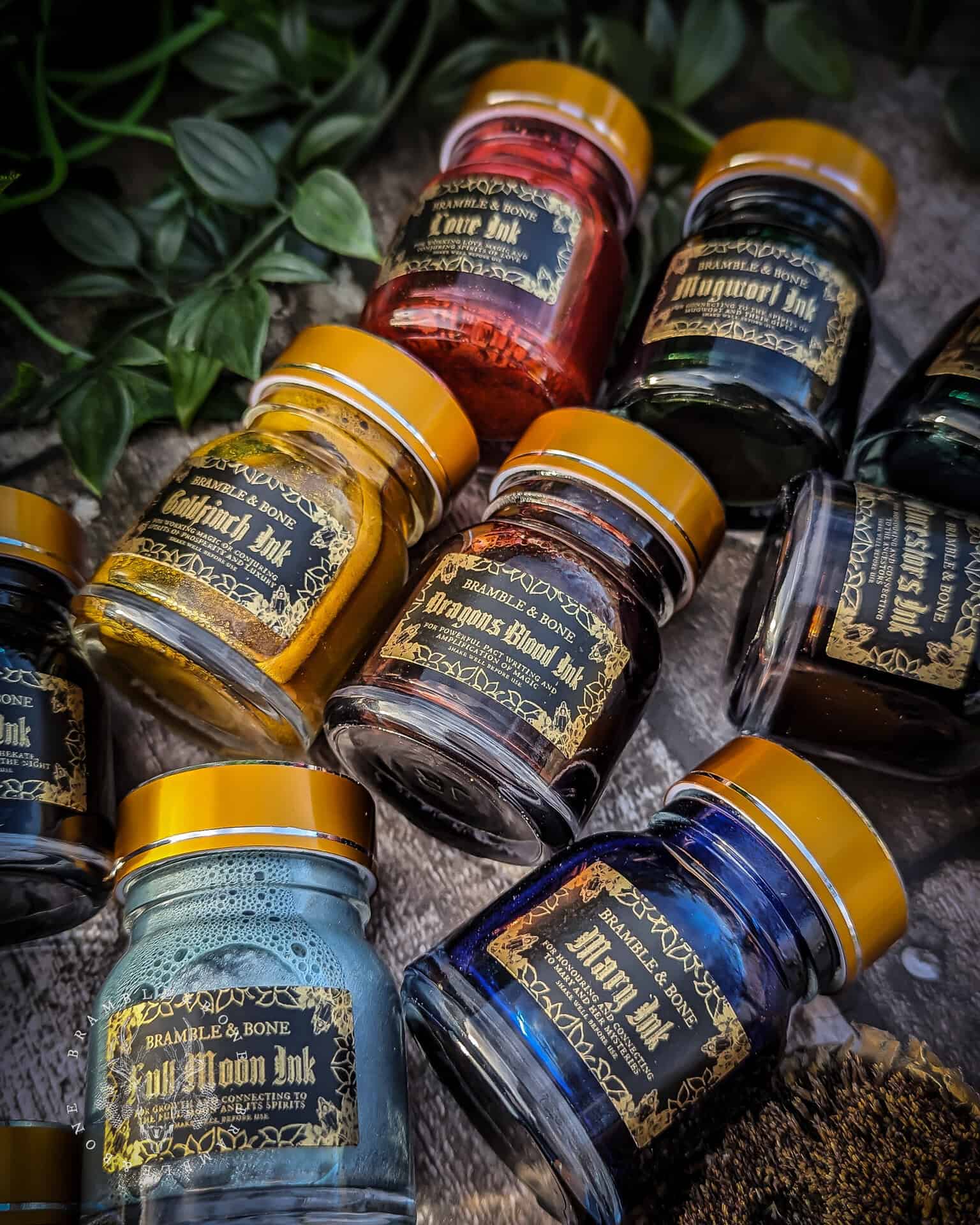
Mugwort ink is for prophecy, boundary-crossing, and cunning healing. Mugwort spirits are firstly known for their connection to the witch. It has long been the witch’s herb for dreaming, spirit work, and walking betwixt – and this ink holds that path wide open. And secondly, they are known for their help in the healing arts and their relationship to the liminal places. Mugwort (Artemisia vulgaris) is named after Artemis, the Goddess of the moon, childbirth, healing, and hunting.
They’re spirits of great power, gifted in prophetic dream work and spirit flight, and have a particular connection to other plant spirits, allowing us to work with other plant spirits to a greater degree. Use it for sigils of sight, divinatory symbols, trance journaling, or charm work that calls to spirits and guides.
This Mugwort ink would be well at home in a protection spell, a fertility spell, lunar magic, healing spells, divinatory writing, or when needing a spell that requires a link to the places betwixt. It can also be used for specific banishing and exorcism rites. There are simply far too many uses to list here, but if you think the spirits of Mugwort would be able to help you, this will see you right.
Charge it under moonlight, smoke, or simply with your breath and gaze. Write with care – this is not for idle hands. A good charging method would also be to place the ink bottle on a dish of hedgerow dirt- or crossroad/ corpse road dirt if you want to get a little darker so that the spirits of the dirt can give those charges (or orders, to use a modern term) to the ink.
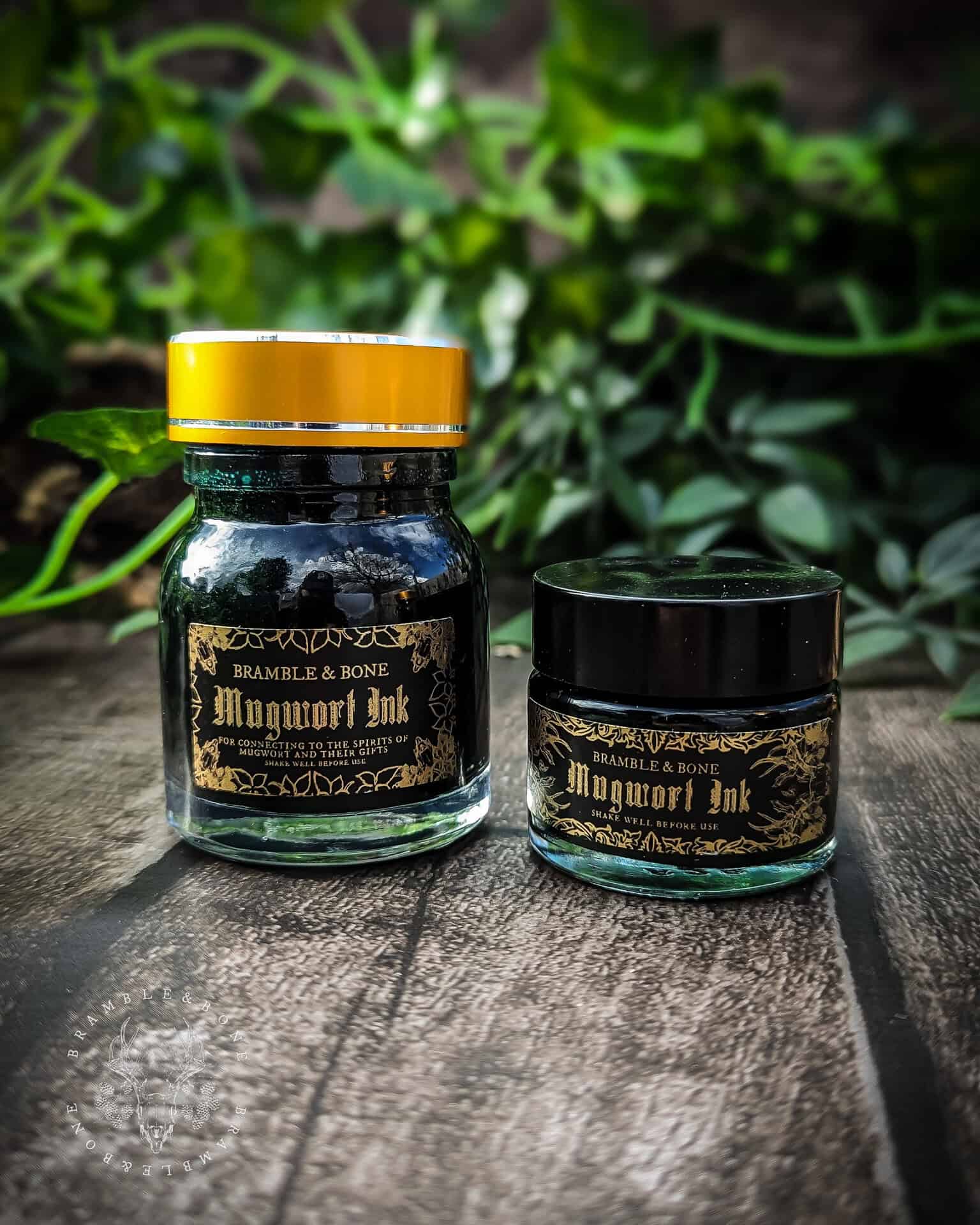
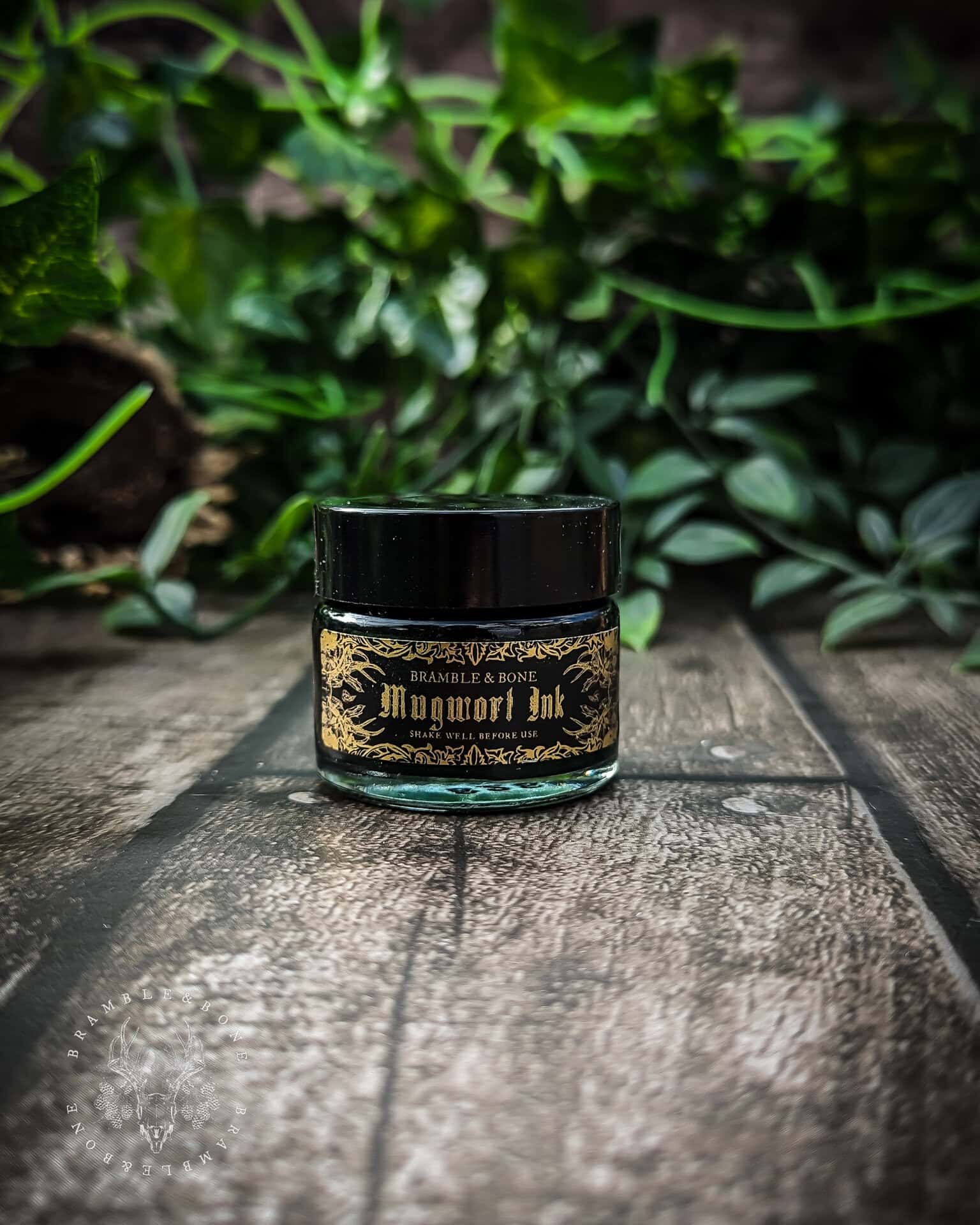
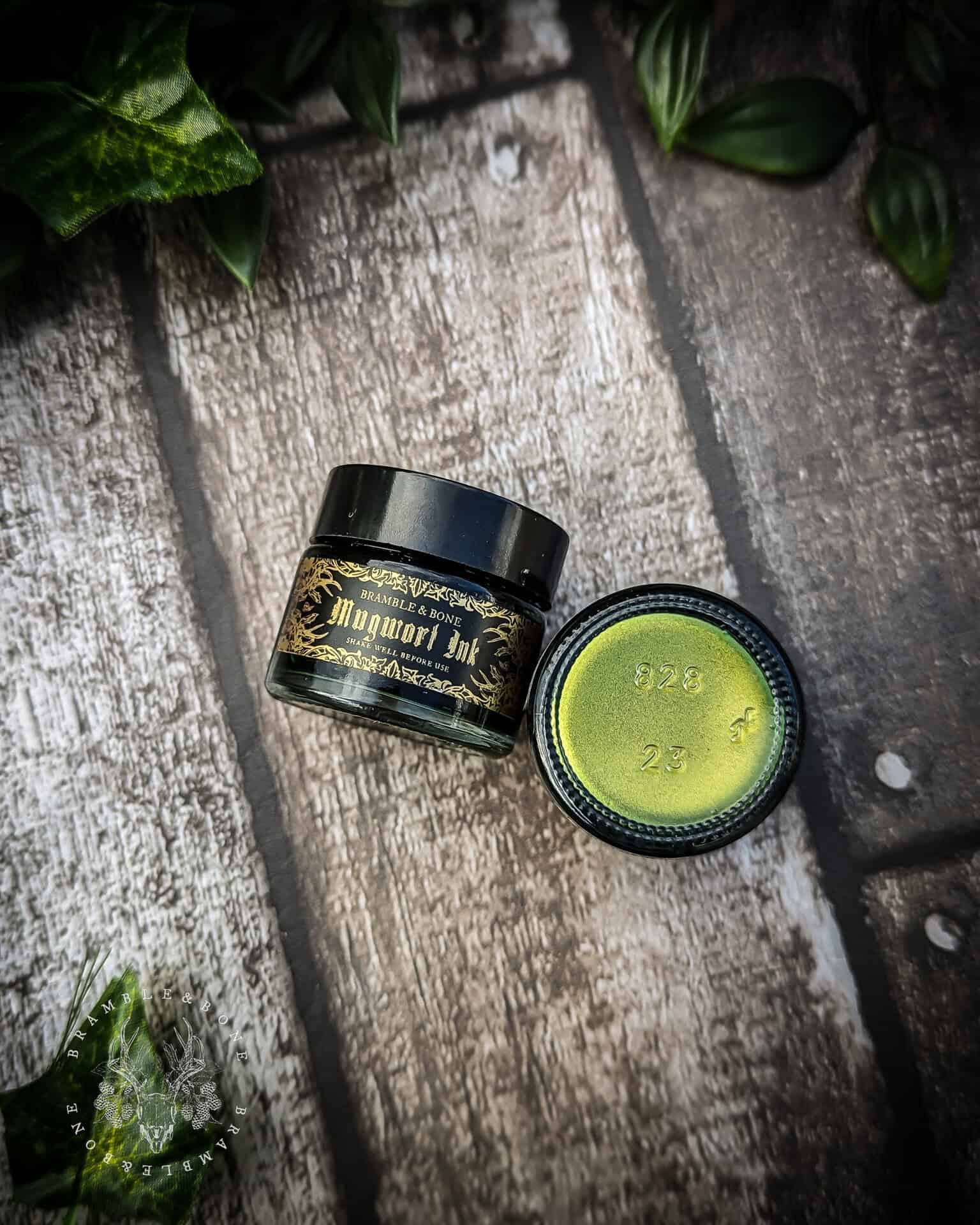
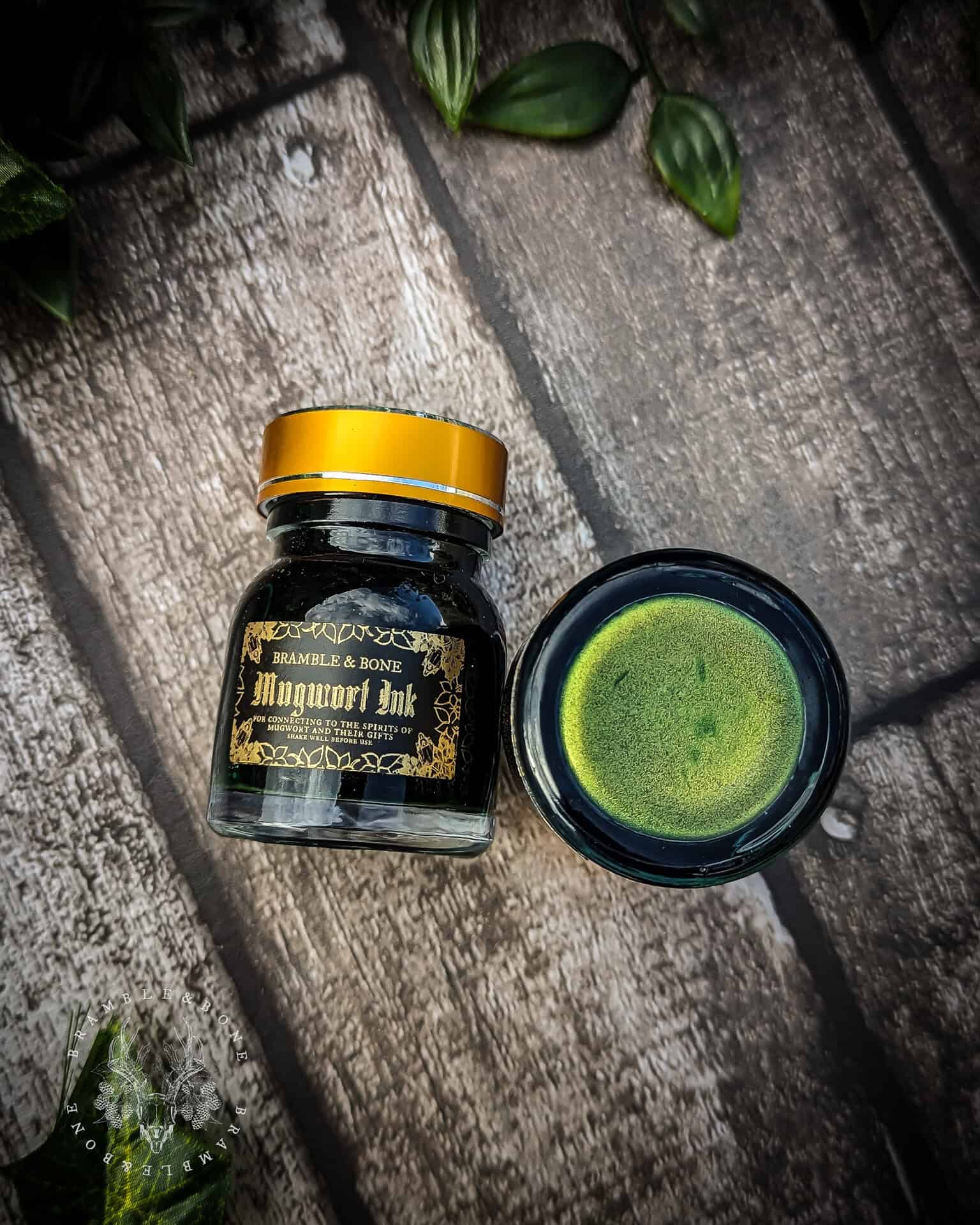
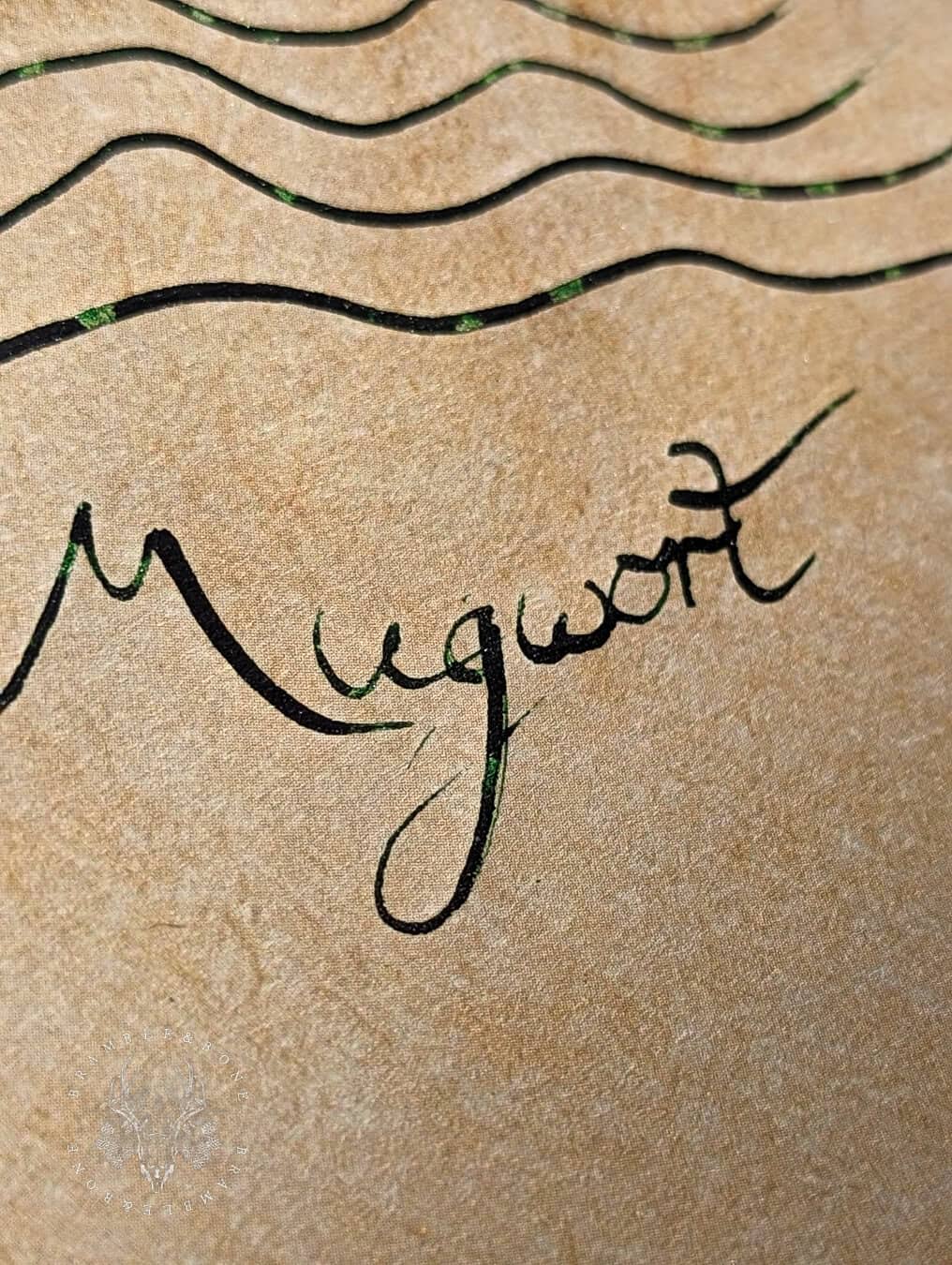
Made with a generous infusion of mugwort essential oil, grounded by sepia and mossy green dyes with a Gold shimmer.
Best practice is to charge the ink with your specific intention before writing- this can be a prayer over the ink bottle, or to work with the pull of the spirits once it is on the page- the choice is yours, and may differ depending on the activation point of your spell or ritual.
As with all our inks, Clove buds are added to each bottle to preserve its power and increase its longevity. Made with dyes, botanicals, tinctures, gums and infusions to conjure and connect to the spirits on many layers.
Shake or stir before use- we like to use a toothpick to really stir the spirits back into action. These inks can be used with a dip pen, but can also be used with feather quills, sticks, paintbrushes or other mark making instruments. These have not been tested with cartridges, for the pen aficionados out there, and we suspect many of our recipes will be too thick. Please clean your writing or painting instrument after use to prevent gum build up.
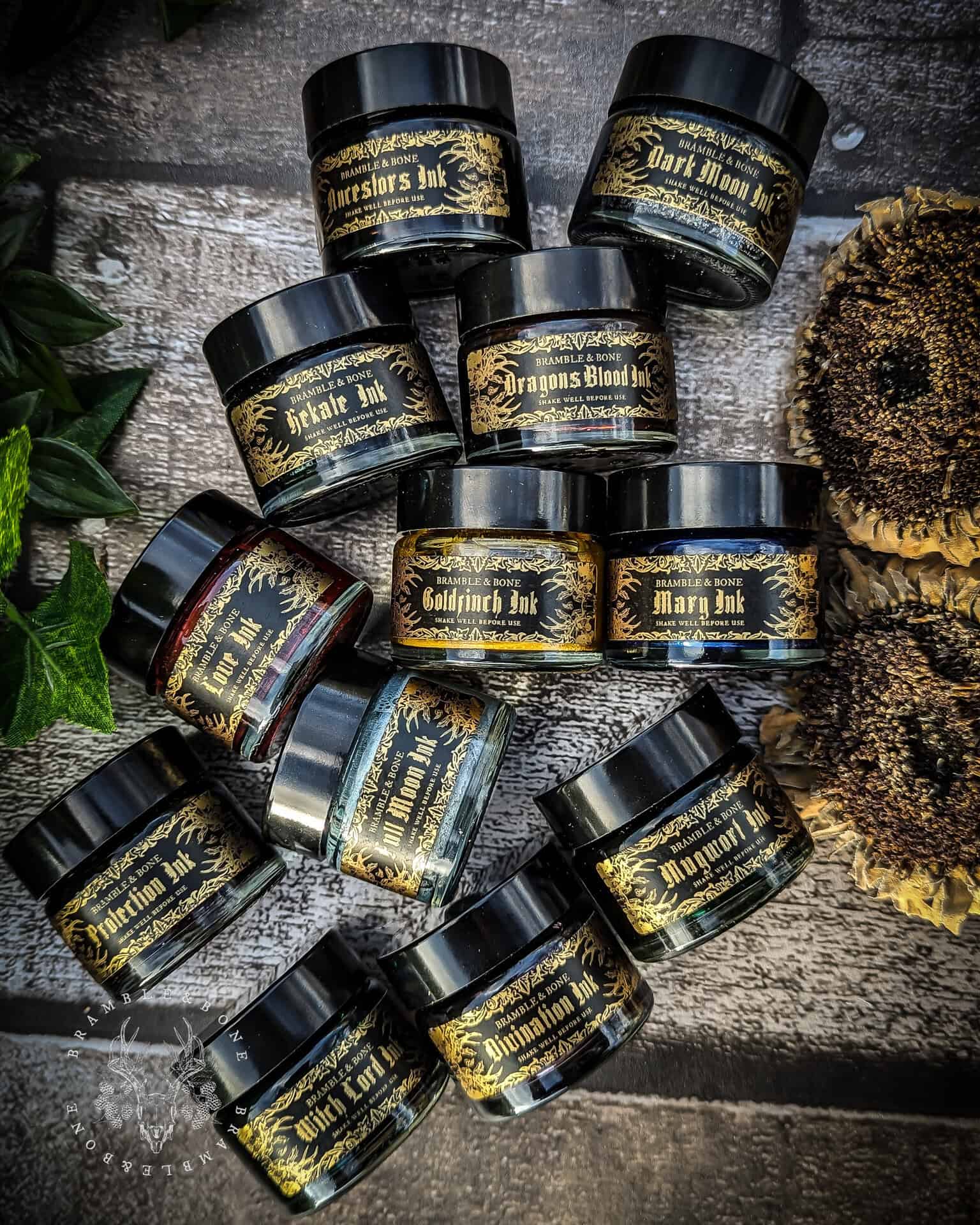
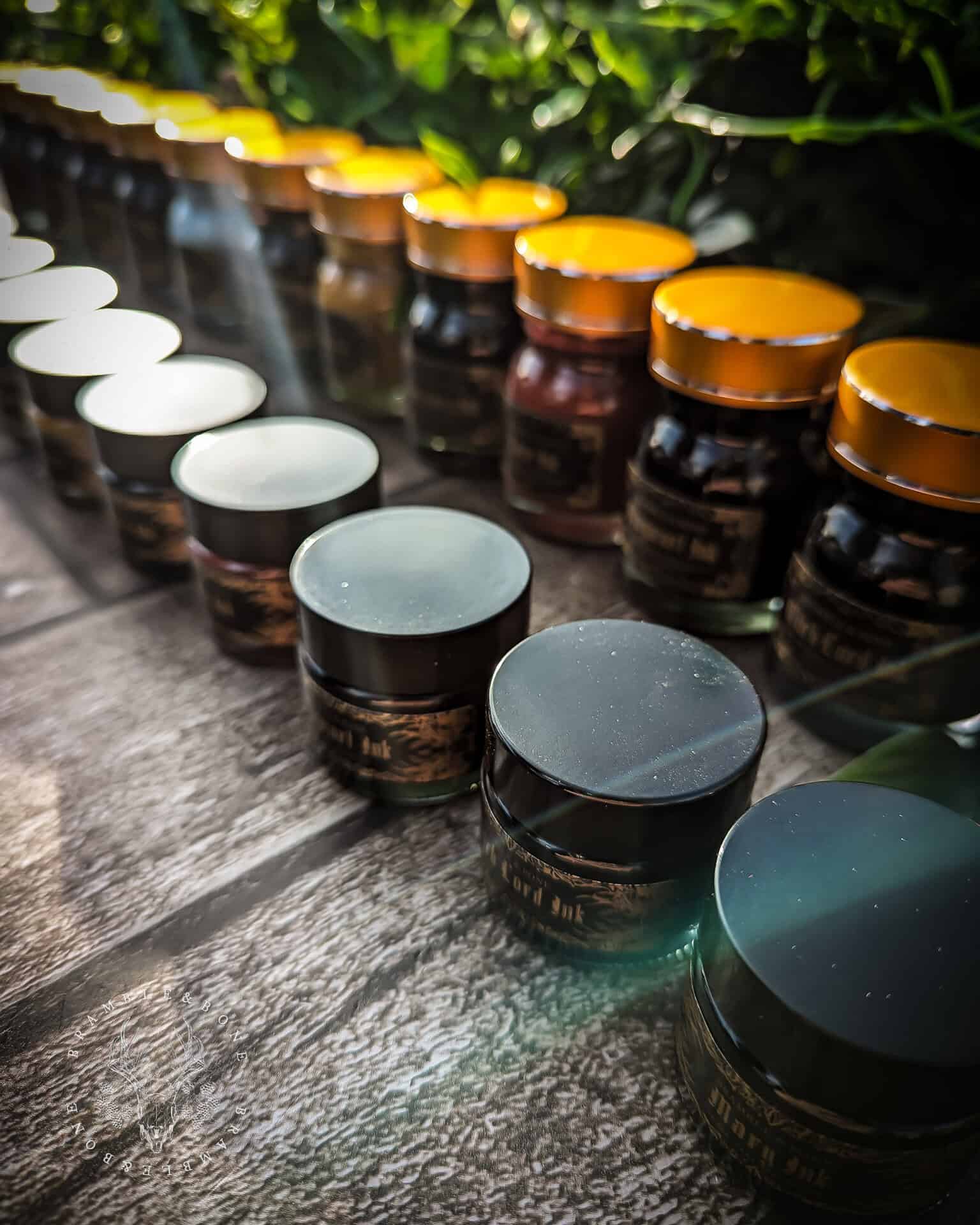
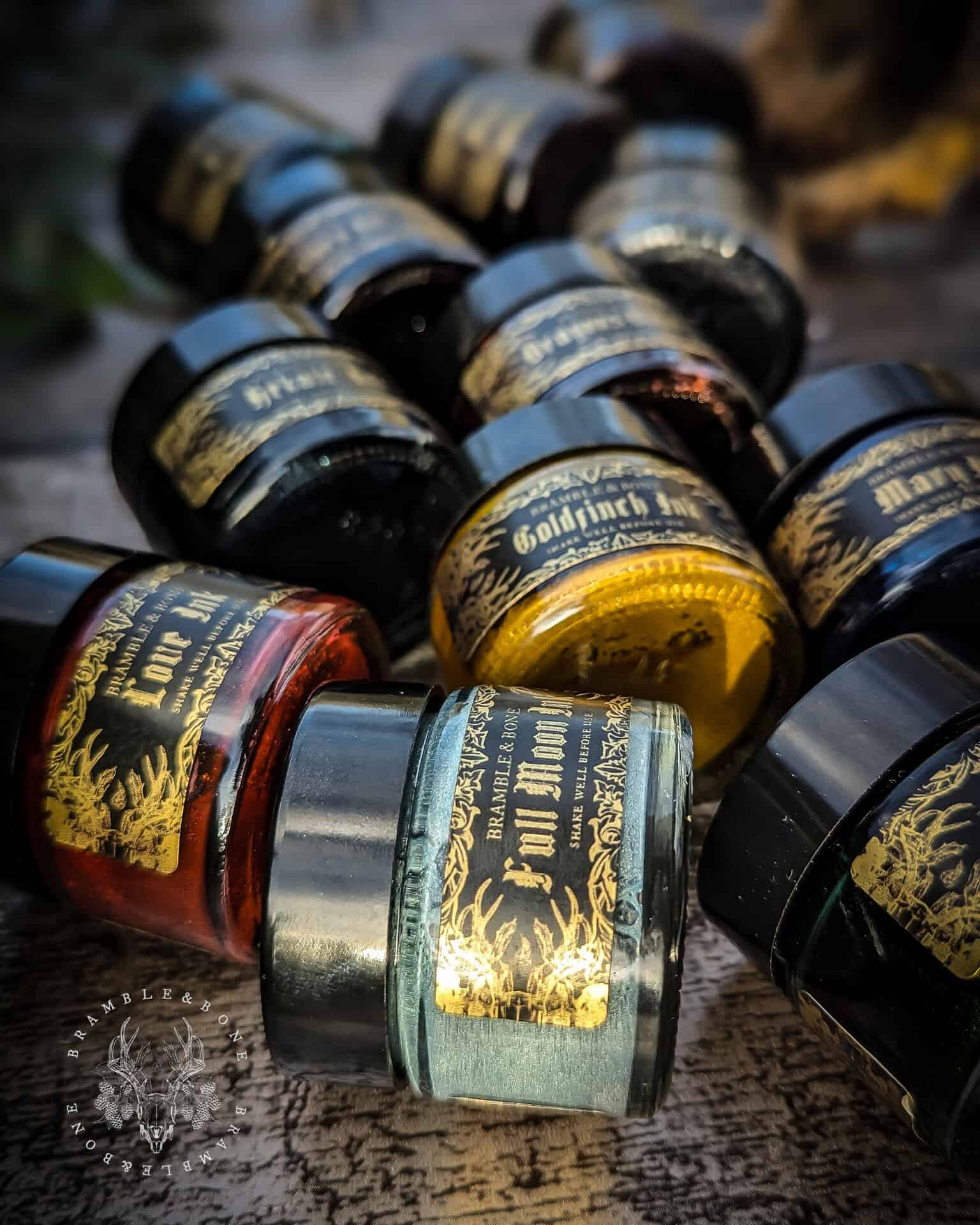
Ink colour may look different to the images provided due to the nature of the botanicals- Mother Nature doesn’t make the same plant twice. This product comes in two sizes- please choose carefully! Please note that these may arrive to you settled out- this is why we recommend to always shake or stir before use!
Product Details:
-
Material: Botanicals, Dyes, Resin, crafted into witchcraft ink. Contained within a clear glass jar.
- Size: 15ml/35ml
-
Colour: Mossy green, with sepia undertone with a gold shimmer.
-
Made in the UK
- Storage Place in a cool dark space for storage, or keep in the fridge between uses to extend it’s life span- this ink is made from natural ingredients
Traditional uses for Inks in British Folk magic:
Write Protective Charms in Ink for the Body or Home
Using magical ink on paper or parchment, you can inscribe protective words, names, or sacred verses to carry on your person or fix above a doorway. Cunning folk often used Latin phrases from Psalms, names of the Three Magi, or palindromic symbols like the SATOR square. These were folded into tiny packets or stitched into clothes, hung in homes, or sealed in small bottles – all believed to guard against witchcraft, illness, or misfortune. The Museum of Witchcraft has an excellent Sator Square on Slate that you can view here.
Craft Healing Amulets for Illness or Ailments
Inks have always been used to write specific formulas intended to draw out sickness or cure spiritual afflictions. A classic method involved inscribing the word “Abracadabra” in a diminishing triangle on paper – believed to drain a fever or ague as the letters diminished. These were worn at the neck or laid beneath the pillow. Certain witchcraft ink correspondences, such as those linked to purification, vitality, or solar force, lend themselves well to this purpose.
Inscribing Names and Spirits for Spell Activation
In traditional folk magic, the act of writing the names of spirits, saints, or holy figures formalised a magical working. Whether invoking an angelic name for aid or writing a person’s name in a love spell or curse, the liquid itself serving as a binding force. The written word made the practitioner’s will tangible, especially when combined with blood, consecrated ink, or writing performed during specific moon phases. (Or, on the more ceremonial side of magic – planetary hours)
Draw Circles, Signs, or Sigils in Ink for Ritual Use
Practitioners draw magical circles, crosses, astrological symbols, or sigils on paper, cloth, or directly onto the work surface using magical ink. This was common in both protective rites and conjurations. The ink – particularly when associated with fire, air, or planetary influence – was chosen to suit the working. For instance, black ink from oak gall or iron was linked to Saturn and might be used in banishing or binding work. This is still a common use today.
Create Curse or Counter-Curse Scripts
Some charms were deliberately written in reverse or with specific malformed letters to signify a harmful working. A recorded Welsh charm used backward writing to place a curse, later discovered and linked to a wise woman accused of witchcraft. Likewise, reversing the direction of names or phrases was believed to break the power of a harmful spell, if one knew how it was constructed. Witchcraft Ink used for such work were often associated with Mars, Saturn, or personal sacrifice (such as blood or soot-based inks).
Mark Livestock Charms or Farm Protection Bottles
Farmers across Britain worked with cunning folk to protect their herds by placing written charms inside barns or stables. These were often created with ink and included psalms, angelic names, or astrological signs. Some were buried in bottles in the wall, under the threshold, or hidden in the rafters. Inks related to earth, fertility, or protection from the evil eye were well-suited for this. Butter charms were often worked in a similar way.
Conceal Intent with Secret Scripts or Glyphs
A common technique involves obscuring magical writing using symbolic alphabets, cryptic glyphs, or the practitioner’s personal shorthand. These signs cloak the working from prying eyes while enhancing its power. Having aspects of the work hidden to increase it’s potency -by shielding it from malefica- is seen across many traditions. The liquid mixtures’ correspondence added another layer – for example, using a Mercury-linked ink for cunning, secrecy, and mental agility.
Fix Intent in Witch Bottles, Poppets, or Burial Charms
A written petition or name, inscribed in magical ink, could be placed inside a witch bottle, poppet, or burial jar. Whether the goal was protection, binding, justice, or love, the liquid helped ‘fix’ the spell into place. Red or black pigments were often used for fiery workings or blood magic, while gentler pigments (lavender-hued, lunar silver, or dove-grey) lent themselves to healing, peace, or mourning rites.
Canting Works- Where’s the Ink?
Amongst the Indigenous Canting Tribes, written charms in their languages – where used – would often be found in Bibles, cheap print (Prognostications, “Poor Robin” almanacs), and pocket service books. The works would often be in the margins and in one of the Canting Symbolic Alphabets, or with an English script and written in the Cant. Patricos- Hedge Priests- Priests of the Canting Tribes, would often use torn prayer leaves with specific inks along with herbs for charms, often written in the Patri-cove Cant – which within itself has a high amount of Latin influence. These specific methods are closed to the Canting Tribes to which they belong, but worth mentioning due to their location in the world.
Lastly, to see how people use these in action, visit our Instagram Page. If you want to learn more about our products and read our blog posts, go to our ‘Learn More’ Page. To view the rest of our witchcraft supplies and pagan products, click on our ‘Shop’ Page.


Reviews
There are no reviews yet.